
Resource
Add More or Replace Attic Insulation? A Phoenix Homeowner’s Guide
Learn when existing attic insulation may be suitable to remain, when removal deserves consideration, and which air-sealing, ventilation, moisture, pest, duct, and safety conditions should be checked first.
Renmark Editorial Team · 6 min read · Published Aug 24, 2026 · Reviewed Aug 24, 2026
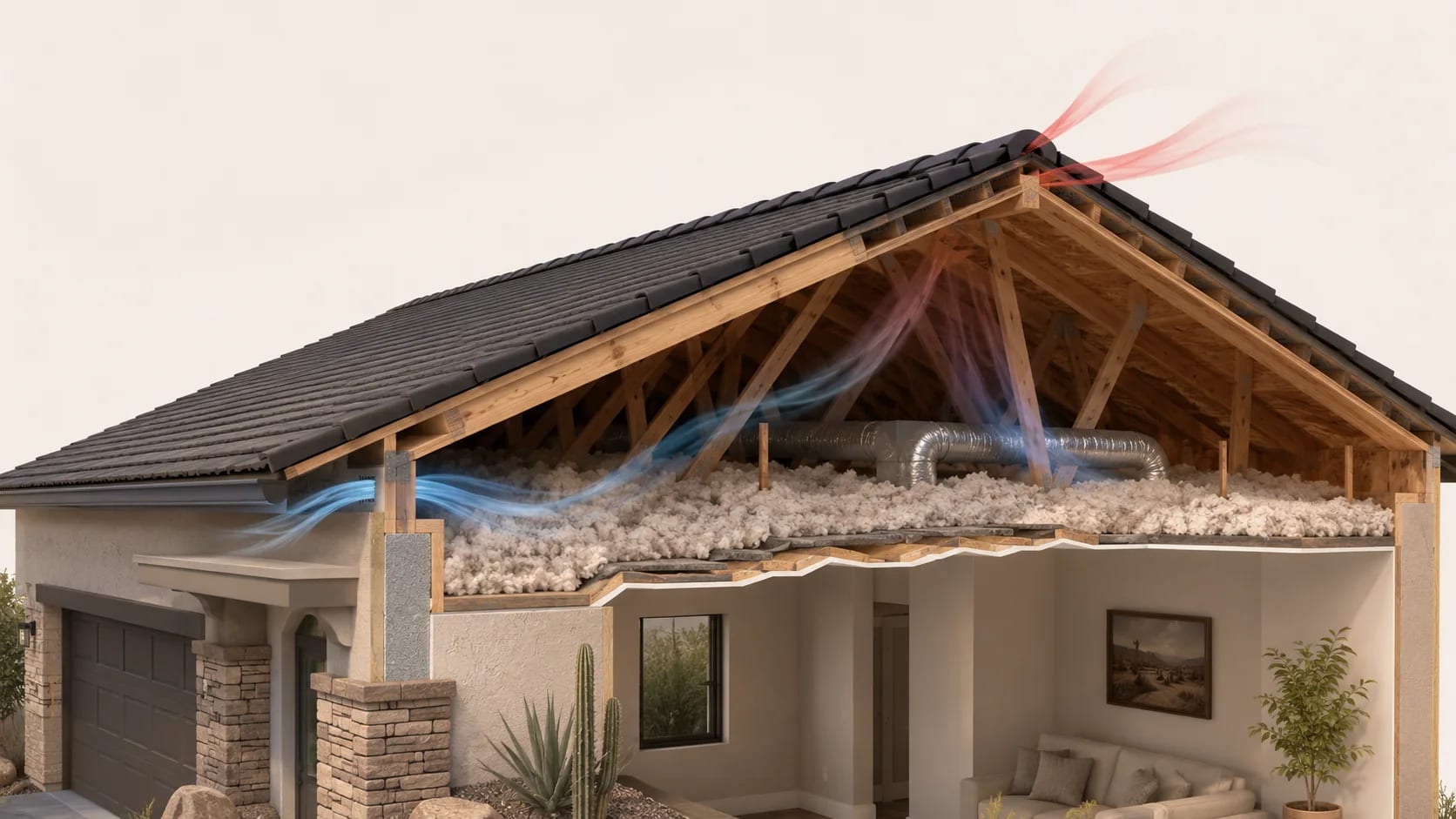
A Phoenix homeowner comparing attic-insulation proposals may hear two very different recommendations: add material over what is already there, or remove everything and begin again. Neither approach is automatically correct. The useful decision starts with the condition of the existing insulation, the ceiling plane below it, ventilation paths, ducts and equipment, safe access, and the reason the project is being considered.
A Renmark attic-insulation evaluation should document what can be observed and separate necessary preparation from optional work. This guide explains how to compare scopes without treating age, depth, a hot room, or one utility bill as a complete diagnosis.
Start with condition, not age alone
Insulation does not reach a universal expiration date on a calendar. Existing loose-fill or batt material may still contribute useful thermal resistance when it is dry, clean, properly located, and able to remain without hiding a condition that needs attention. Age can provide context, but it does not establish performance or prove that removal is necessary.
An evaluation should record the material type when reasonably identifiable, visible coverage, thin or bare areas, compression, disturbance, and differences between attic sections. It should also distinguish confirmed observations from spaces that cannot be reached safely. A depth reading taken beside the access hatch should not be presented as proof that every part of the attic is the same.
When adding over existing insulation may make sense
Adding insulation can be a reasonable scope when the existing material is suitable to remain and the work can produce more continuous coverage. That often means the material is dry, free of concerning odor or visible contamination, not concealing an unresolved leak, and compatible with the proposed installation approach. Localized gaps or disturbed areas may need correction before the broader top-up begins.
Keeping useful material can avoid unnecessary removal, disposal, time, and cost. It does not eliminate preparation. The installer still needs to protect intended ventilation openings and required clearances, maintain safe access around equipment, and explain how the new material will cover remote or divided attic areas. The proposal should identify what remains and what, if anything, will be moved or removed locally.
When removal or replacement deserves consideration
Removal may be appropriate when insulation is wet, moldy, persistently odorous, affected by animal waste, damaged by smoke or another event, or located where repair and safe preparation cannot otherwise be completed. The source of moisture, pests, smoke, or other damage should be addressed before new insulation covers the area. Removing material without correcting the cause simply hides the same risk beneath a new layer.
Suspected hazardous material is a separate safety issue, not an ordinary insulation upgrade. Vermiculite-like material should not be disturbed casually; the Environmental Protection Agency advises homeowners to assume vermiculite attic insulation may contain asbestos and to use appropriately trained professionals when assessment or removal is needed. A general insulation proposal should clearly identify work that requires an environmental, pest, roofing, HVAC, electrical, or other qualified specialist.
Address air leaks and other attic conditions first
Insulation slows heat transfer, while air sealing limits uncontrolled air movement through the ceiling plane. Adding loose-fill material does not by itself seal openings around plumbing, wiring, chases, attic hatches, or other penetrations. When air sealing belongs in the scope, it is generally easier to define and complete before those areas are buried beneath additional insulation.
Preparation must respect the home’s actual assembly. Recessed fixtures, flues, combustion equipment, electrical components, bath exhaust, soffit baffles, ducts, and mechanical platforms can require clearances or another trade’s review. Roof leaks, damaged ducts, unsafe wiring, pest entry, and blocked ventilation should be documented rather than folded into a vague promise that more insulation will fix every comfort concern.
Compare R-value, depth, density, and coverage
R-value describes resistance to heat flow; it is not a material name or a universal number of inches. The relationship between depth and R-value depends on the insulation product, installed density, settling information, and manufacturer coverage chart. Compression, gaps, and thin edges can reduce performance even when one measurement near the center looks adequate.
Ask each contractor to document the estimated existing condition, proposed product, intended final R-value, installed or settled depth as applicable, square footage, quantity, and method for checking even coverage. Current building-code requirements and utility-program criteria can provide context, but they are not interchangeable and do not automatically create the same requirement for every existing-home project. Verify the current jurisdiction, permit scope, and program terms instead of relying on an old web chart or a verbal label.
As of this guide’s review date, SRP lists a residential attic-insulation rebate with customer, property, contractor, project, and air-sealing conditions. Verify the current terms and eligibility before treating any incentive as part of the project price.
Read the quote as a complete scope
Two proposals with the same target R-value can describe very different work. A useful comparison makes preparation, included attic sections, exclusions, protection, installation, cleanup, and completion evidence visible. If one contractor recommends full removal and another recommends adding material, ask each to connect that recommendation to documented conditions in the home.
The written scope should answer the practical questions that determine what you are buying:
Which attic areas were observed, and which remain inaccessible or unverified?
What existing material stays, moves temporarily, or is removed—and why?
Which air-sealing, baffle, hatch, clearance, duct, or repair work is included?
What product, target R-value, coverage area, quantity, and depth will be documented?
How will occupied areas, the access route, ducts, equipment, and finishes be protected?
What cleanup, insulation certificate, photographs, warranty documents, and walkthrough will be provided?
Which roof, HVAC, electrical, pest, moisture, or environmental conditions are excluded?
Keep homeowner checks within safe limits
You may be able to note visible conditions from a safe attic access, but a Phoenix attic can become dangerously hot and may contain weak walking surfaces, concealed wiring, sharp fasteners, dust, or unfamiliar materials. Do not step between framing members, compress insulation to create a path, or disturb suspect material to obtain a measurement. Tell the evaluator what you have observed and let qualified workers determine safe access.
Useful homeowner records include which rooms feel different, when the condition occurs, photographs taken without unsafe entry, known roof or HVAC work, prior insulation documents, pest or moisture history, and recent changes around the attic. These observations help define the inspection; they do not establish the cause or support a guaranteed temperature or utility-bill result.
Choose the least disruptive scope that solves the documented problem
The goal is not to preserve every handful of old insulation or to remove useful material for the sake of a clean photograph. It is to create a safe, clearly defined thermal-boundary improvement that responds to the attic’s observed condition. Sometimes that means preparation followed by additional material. Sometimes contamination, damage, access, or needed repairs justify partial or full removal first.
Renmark can evaluate accessible attic conditions in Phoenix-area homes and explain what remains, what changes, and which items require another qualified trade. Review the attic ventilation guide, estimate-preparation guide, and contractor-selection guide alongside the written proposal so insulation, air sealing, ventilation, and roof work remain connected but distinct decisions.
Questions related to this guide
How do I know whether my attic needs more insulation?
Visible thin, bare, uneven, settled, or disturbed areas can justify an evaluation, but material depth alone does not explain every comfort concern. Renmark reviews accessible coverage, the ceiling plane, ventilation clearances, penetrations, ducts, equipment, and relevant history before recommending a scope.
Can new attic insulation be installed over existing material?
Sometimes, when the existing material is dry, compatible, safely located, and suitable to remain. Wet, contaminated, damaged, compacted, pest-affected, or suspect material may need a different plan, so the existing attic should be evaluated before it is covered.
What type of attic insulation does Renmark install?
The proposed material depends on the attic assembly, existing insulation, access, coverage needs, ventilation, nearby equipment, and written product requirements. The estimate identifies the exact loose-fill, batt, or other approved approach included in the project instead of promising one material for every home.
Is air sealing included with attic insulation?
Air sealing and insulation perform different jobs, and accessible ceiling penetrations may need attention before insulation is added. The written Renmark scope should identify any air-sealing work that is included, items that must remain clear, and conditions that require an electrical, HVAC, or other qualified trade.
What conditions should be addressed before attic insulation is installed?
Active moisture, roof leaks, unsafe wiring, combustion-clearance concerns, damaged ducts, pest activity, bath exhaust terminating in the attic, and suspected hazardous material should be identified before they are covered. The appropriate qualified professional should address work outside the insulation scope.


Continue your research
Attic InsulationRenmark evaluates and installs residential attic insulation for greater Phoenix homeowners, with attention to existing material, coverage, air-leak paths, ventilation clearances, attic access, and nearby ducts or equipment.Phoenix service areaRenmark serves Phoenix homeowners as part of its greater Phoenix and surrounding-community service area. Residential attic-insulation evaluations are available by phone so Renmark can confirm the address, attic access, and requested scope.Tempe service areaRenmark is based in Tempe and serves homeowners throughout the greater Phoenix area and surrounding communities. Residential attic-insulation evaluations are available by phone so Renmark can confirm the address, attic access, and requested scope.Attic Insulation in PhoenixPhoenix attic-insulation planning should begin with the individual home, not a citywide assumption. Mid-century block homes, later infill, and newer stucco construction can have different ceiling penetrations, attic geometry, duct layouts, ventilation paths, and layers of prior insulation work. Renmark reviews accessible coverage for thin, bare, settled, compressed, or disturbed areas and documents how the proposed material will fit around hatches, ducts, wiring, recessed fixtures, and intended ventilation openings. The scope should distinguish insulation work from roof, HVAC, electrical, pest, or moisture repairs.
Ready to Discuss Your Home?
Tell Renmark what you would like evaluated, and our team will help you understand the condition of your home, available options, and appropriate next steps.