
Resource
What Makes an Entry Door More Secure? A Homeowner’s Guide
Evaluate entry-door security as a complete opening—including the slab, frame, strike, hinges, glass, hardware, and installation—not a single lock feature.
Renmark Editorial Team · 4 min read · Published Jul 18, 2026 · Reviewed Jul 18, 2026
A strong deadbolt cannot compensate for a damaged jamb, loose frame, weak glass detail, or hardware that does not align. Entry-door security comes from the complete opening and how its parts transfer force into sound surrounding construction.
No residential door can promise absolute security. A practical comparison looks for compatible components, reliable everyday operation, and installation details that avoid obvious weak points while still meeting the household’s access, egress, and usability needs.
Begin with a sound, well-fitted opening
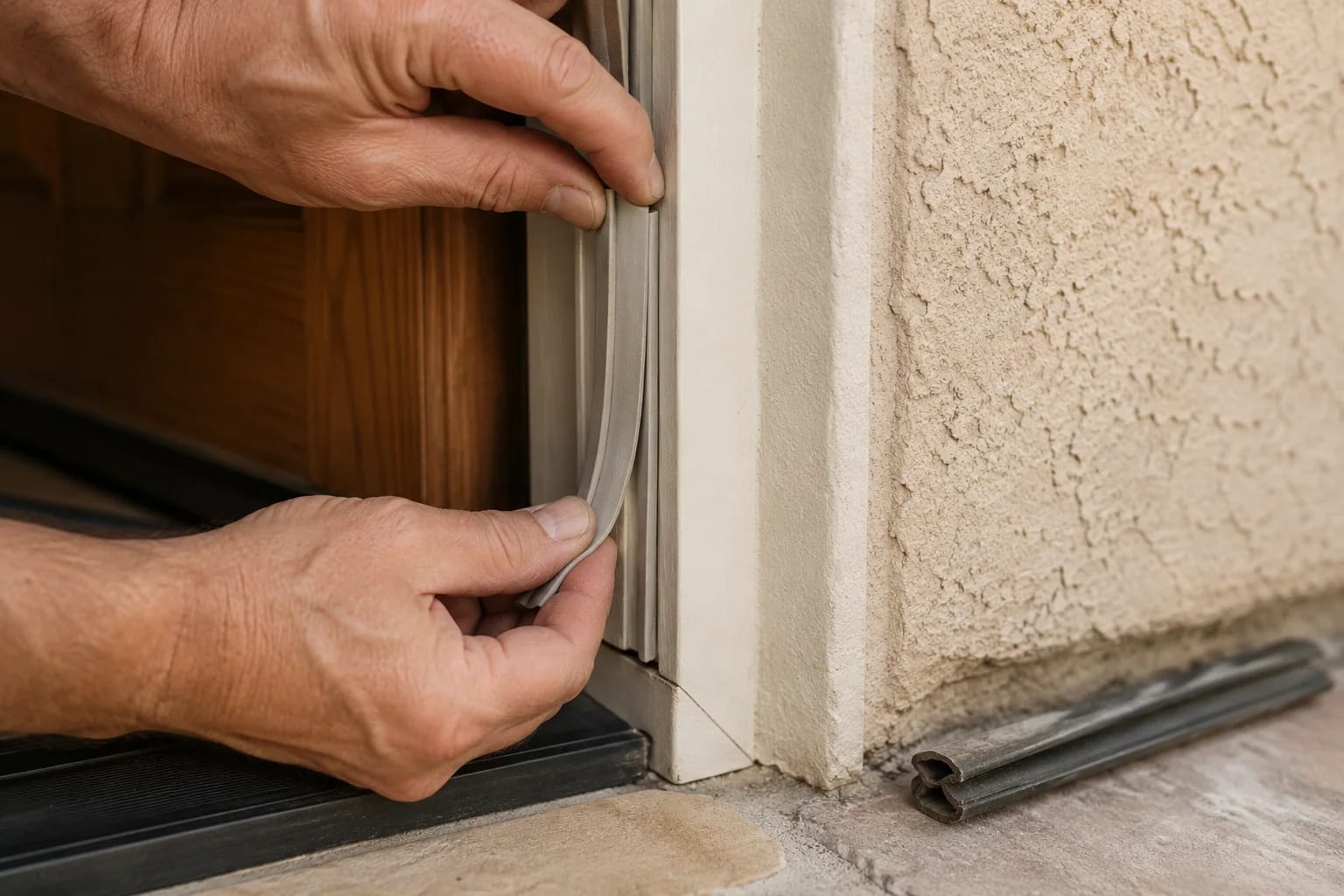
The door slab should close without scraping, excessive movement, or pressure that prevents consistent latching. The frame should be securely installed and free of significant deterioration at the jamb and threshold. Cracked material, recurring water damage, or an opening that has shifted can undermine otherwise capable hardware.
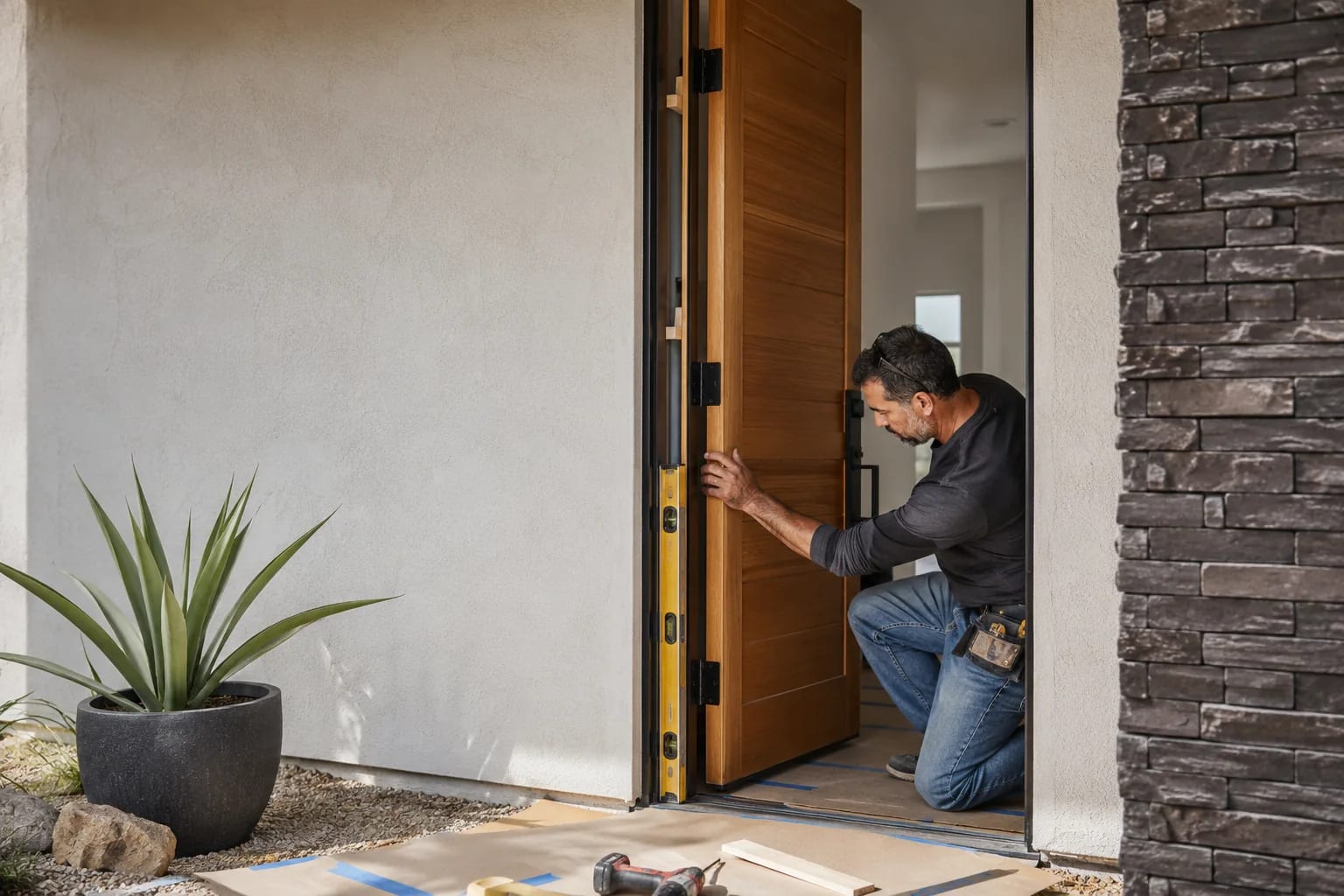
A replacement evaluation should include the rough-opening conditions that can be observed, frame attachment approach, threshold, exterior water management, and interior finish scope. Simply hanging a new slab in a compromised frame may leave the underlying condition unchanged.
Treat the latch side as a connected system
The lock, bolt, strike, jamb, fasteners, and surrounding framing work together. A bolt should extend and engage as designed without needing to lift or pull the door. The strike should be compatible with the hardware and installed on sound material rather than relying on damaged trim.
Ask what lock preparation and strike components are included in a proposal and who supplies specialty or smart hardware. Product instructions govern compatible fasteners and installation details; longer fasteners are not a universal substitute for proper alignment, material condition, and manufacturer requirements.
Hinges and the hinge-side jamb also matter
Substantial, correctly sized hinges help the door remain aligned over repeated use. Loose screws, movement at the jamb, or a door that drops and rubs can interfere with latching and sealing. Out-swing and specialty configurations may use additional design features appropriate to their exposed hinges.
Hardware should match the door’s weight, dimensions, swing, and manufacturer requirements. If hinge attachment points are stripped or the jamb is split, an evaluator should identify the damaged material rather than relying only on an adjustment.
Compare the slab, glass, and panel construction together
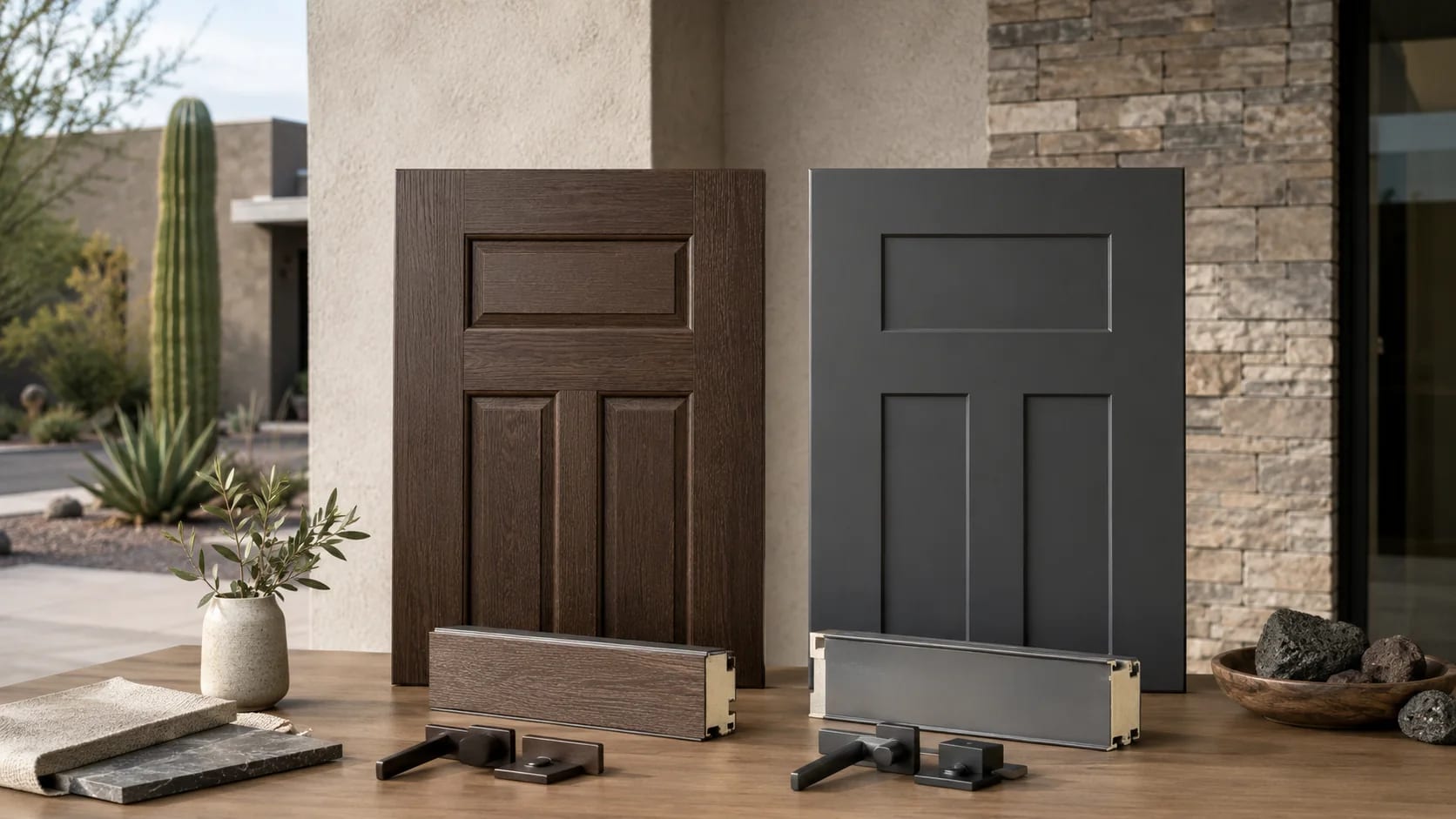
Fiberglass, steel, and other door systems use different skins, cores, edges, reinforcements, and finish options. Material labels alone do not describe the whole assembly. Ask for the specific product configuration, including how hardware and glass are incorporated.
Decorative glass changes privacy, daylight, and the construction around the opening. If glass is near operating hardware, discuss the complete factory option and any relevant product rating rather than adding an unverified film or accessory and assuming it creates a particular level of protection.
Balance security with safe, reliable daily use
A secure entry still needs to operate for the people who use it. Consider key control, visibility, lighting, threshold height, lever or knob operation, screen or storm doors, alarms, and the way residents exit in an emergency. Avoid arrangements that make egress confusing or depend on a misplaced key from the inside.
Smart locks add convenience features, but the mechanical fit of the door remains important. Confirm door alignment, battery access, manual operation, and compatibility before treating electronics as the solution to a binding latch or damaged frame.
Use a complete-door checklist when comparing proposals
Ask each proposal to identify the door system, frame, threshold, hardware preparation, glass, finish, installation, trim, sealants, disposal, and responsibility for alarms or specialty locks. Comparable scope is more useful than comparing a lock brand or door-skin material in isolation.
Does the door latch and deadbolt engage smoothly without force?
Are the jamb and threshold sound and securely installed?
What strike, hinge, and lock preparation comes with the system?
How do glass and sidelites affect privacy and the complete design?
Who will install and test smart locks, alarms, or access hardware?
Have a damaged or unreliable opening evaluated
Difficulty latching, loose hardware, frame movement, cracked glass, or deteriorated jamb material deserves more than a cosmetic fix. The evaluator should explain what is repairable, what is included in replacement, and how final operation will be checked.
Renmark can review entry-door openings for Arizona homeowners and help compare complete replacement systems. The goal is a door that fits the opening, operates consistently, and coordinates the relevant components without unsupported promises.
Questions related to this guide
Can an existing door opening be reused?
Many replacement doors use the existing rough opening, but it still needs accurate measurement and evaluation. Frame condition, squareness, threshold height, wall construction, sidelites, swing clearance, and water management can affect the recommended unit and whether corrective work is needed.
What should I consider when selecting an entry door?
Consider the opening dimensions, sun and weather exposure, security hardware, glass and privacy, accessibility, swing direction, threshold, finish maintenance, architectural fit, and warranty terms. Also confirm which components are included so you can compare complete installed systems rather than only the door slab.
What are common signs an exterior door may need replacement?
Look for difficult operation, recurring gaps, damaged or soft material, a loose frame, water entry, failed hardware mounting, cracked glass, or a door that cannot be adjusted to latch and seal consistently. Some issues can be repaired, so the opening, frame, threshold, and surrounding materials should be evaluated together.
Continue your research
DoorsRenmark helps homeowners replace entry, patio, and exterior doors with options designed to improve appearance, function, security, and energy performance.Phoenix service areaRenmark serves Phoenix homeowners as part of its greater Phoenix and surrounding-community service area. Residential attic-insulation evaluations are available by phone so Renmark can confirm the address, attic access, and requested scope.Tempe service areaRenmark is based in Tempe and serves homeowners throughout the greater Phoenix area and surrounding communities. Residential attic-insulation evaluations are available by phone so Renmark can confirm the address, attic access, and requested scope.
Ready to Discuss Your Home?
Tell Renmark what you would like evaluated, and our team will help you understand the condition of your home, available options, and appropriate next steps.