
Resource
Fiberglass vs. Steel Entry Doors for Arizona Homes
Compare fiberglass and steel entry-door systems by exposure, appearance, maintenance, security hardware, glass, frame construction, and installation.
Renmark Editorial Team · 4 min read · Published Jul 15, 2026 · Reviewed Jul 15, 2026
Fiberglass and steel are common entry-door skin materials, but the skin is only one part of the system. The core, frame, threshold, weather seals, glass, finish, hardware preparation, exposure, and installation all influence how a door looks and operates.
For an Arizona home, direct sun and heat exposure deserve attention alongside style and security. Neither material is automatically best for every opening. A shaded entry, a west-facing door, and a door behind a storm or security door can have different priorities.
Start with the complete door system
A prehung entry system usually includes the slab, hinges, frame, threshold, weather seals, and preparation for locks. Sidelites, transoms, glass inserts, multipoint hardware, and specialty finishes add variables. Compare proposals component by component instead of assuming two doors with the same skin material are equivalent.
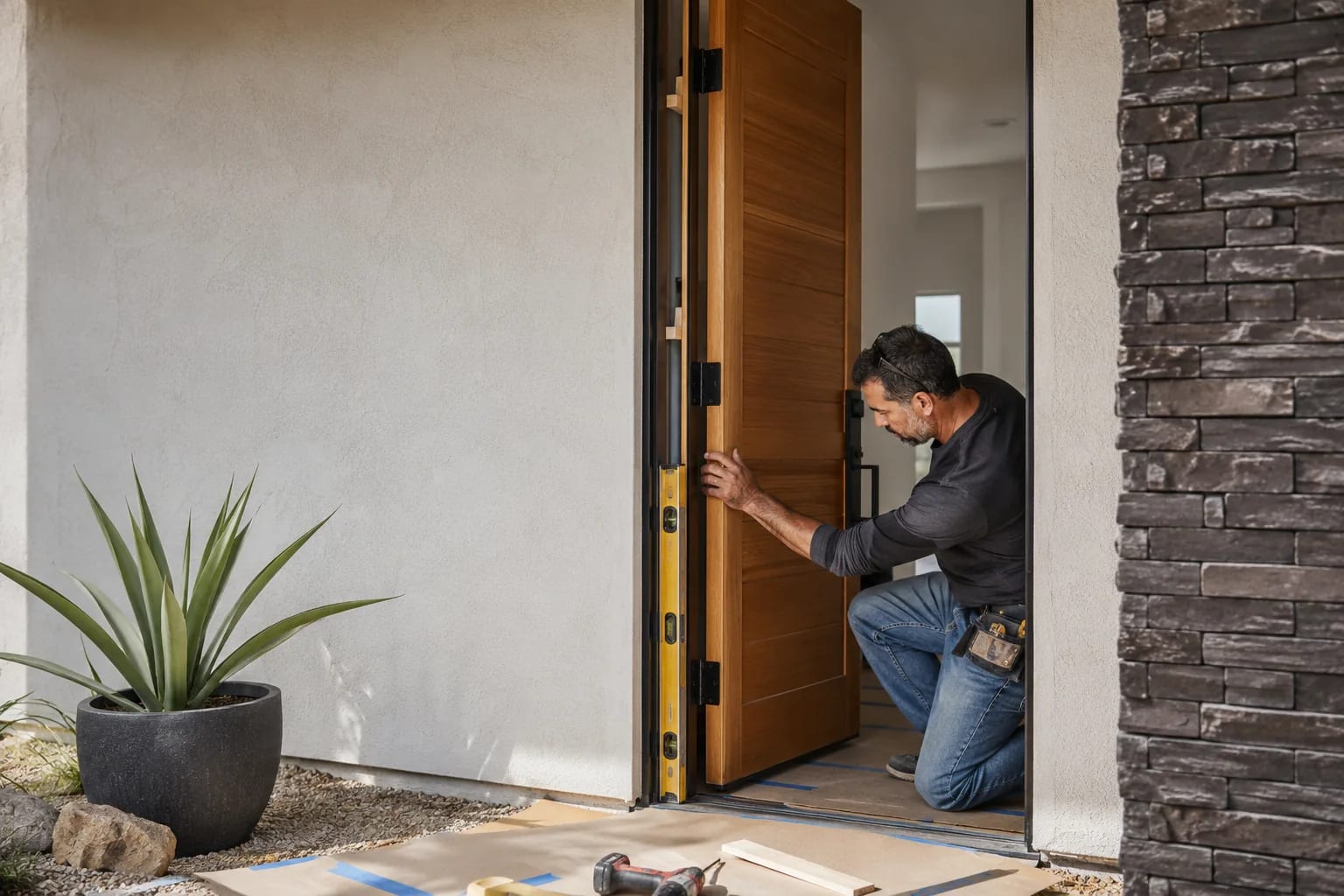
Ask whether the frame material and finish suit the opening, how the threshold meets the floor, and which exterior trim or seal work is included. A high-quality slab installed in a damaged or poorly prepared frame will not solve operation or water-management problems.
Fiberglass door considerations
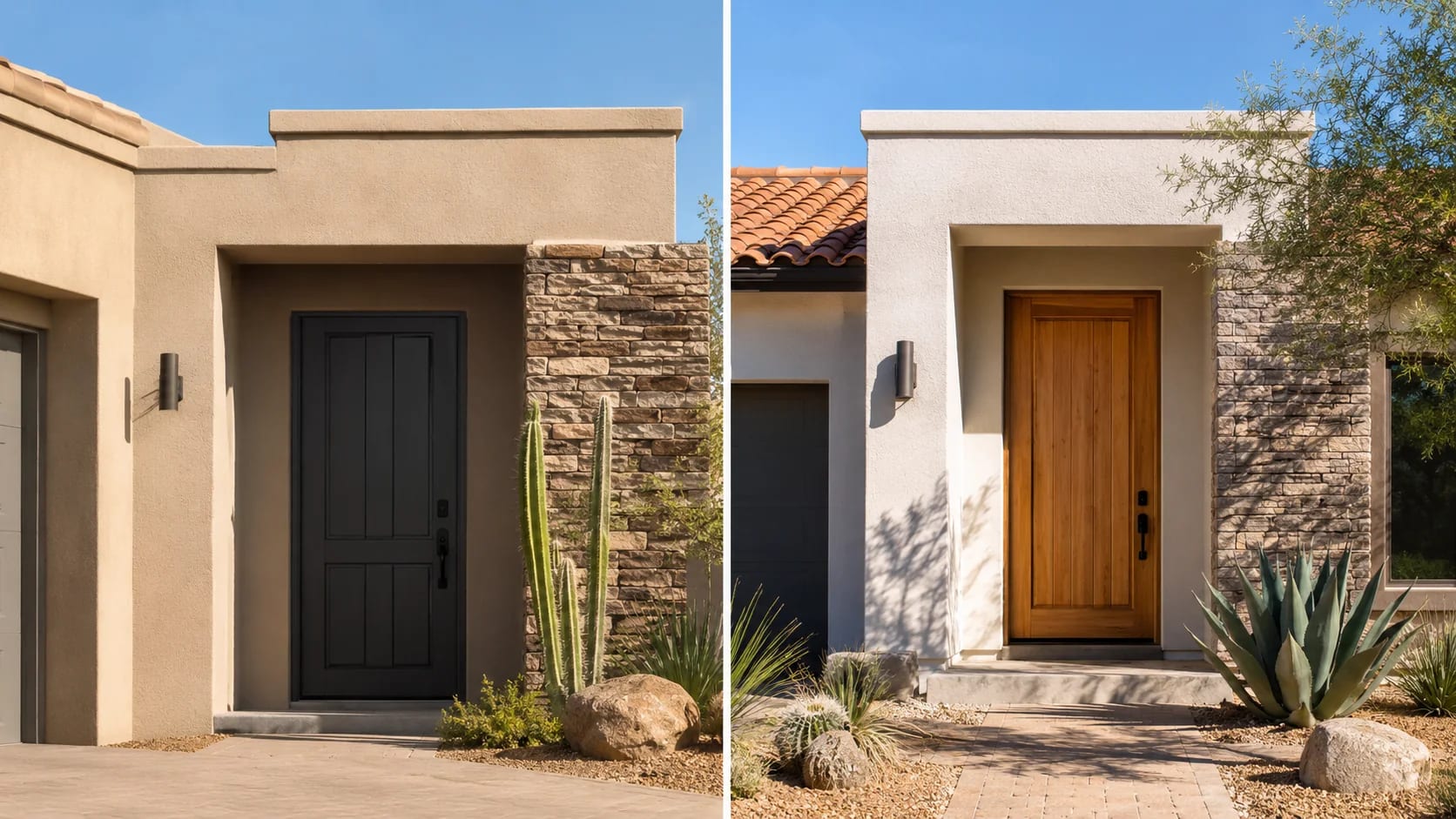
Fiberglass door skins can be smooth or textured to resemble painted or stained wood. Available styles, panel profiles, glass, and finishes vary widely. The material can resist some types of surface damage, but it is not immune to impact, finish wear, edge damage, or problems caused by exposure and installation.
When reviewing fiberglass, ask about the approved finish system and maintenance instructions for the door’s orientation. Dark colors and intense sun can affect surface temperatures, and manufacturer requirements may differ. Written product documentation should guide the selection.
Steel door considerations
Steel-skinned doors are available in many panel and glass designs and can provide a clean painted appearance. Gauge, core, edge construction, corrosion protection, and finish system differ among products. Steel can dent from impact, and exposed damage should be maintained according to the manufacturer’s instructions.
A steel label alone does not define security. Lock preparation, strike reinforcement, hinges, frame attachment, glass, and disciplined use are all part of the opening. Ask how the proposed hardware and frame work together rather than treating the skin as the only security feature.
Sun and heat exposure affect both choices
Strong direct sun can heat the exterior surface and accelerate finish weathering. Overhangs, recesses, nearby paving, color, glass area, and the presence of another door can change exposure. Some combinations may be restricted by product instructions or warranty terms.
Tell the representative which hours the entry receives sun and whether an existing finish has faded, cracked, or become unusually hot. Ask for written care requirements and color limitations for the exact product. Avoid relying on a general statement that a material is “maintenance-free.”
Compare glass, privacy, and light
Decorative or clear glass can bring daylight into an entry, but it also changes privacy, solar exposure, safety-glazing needs, and security considerations. Review glass at realistic viewing distances and from both sides. Confirm whether sidelites and transoms use the same design and coating package.
If heat or glare is a concern, ask for performance information for the complete glazed door system. Aftermarket films or treatments should not be assumed compatible without checking product guidance.
Maintenance is specific to the finish and exposure
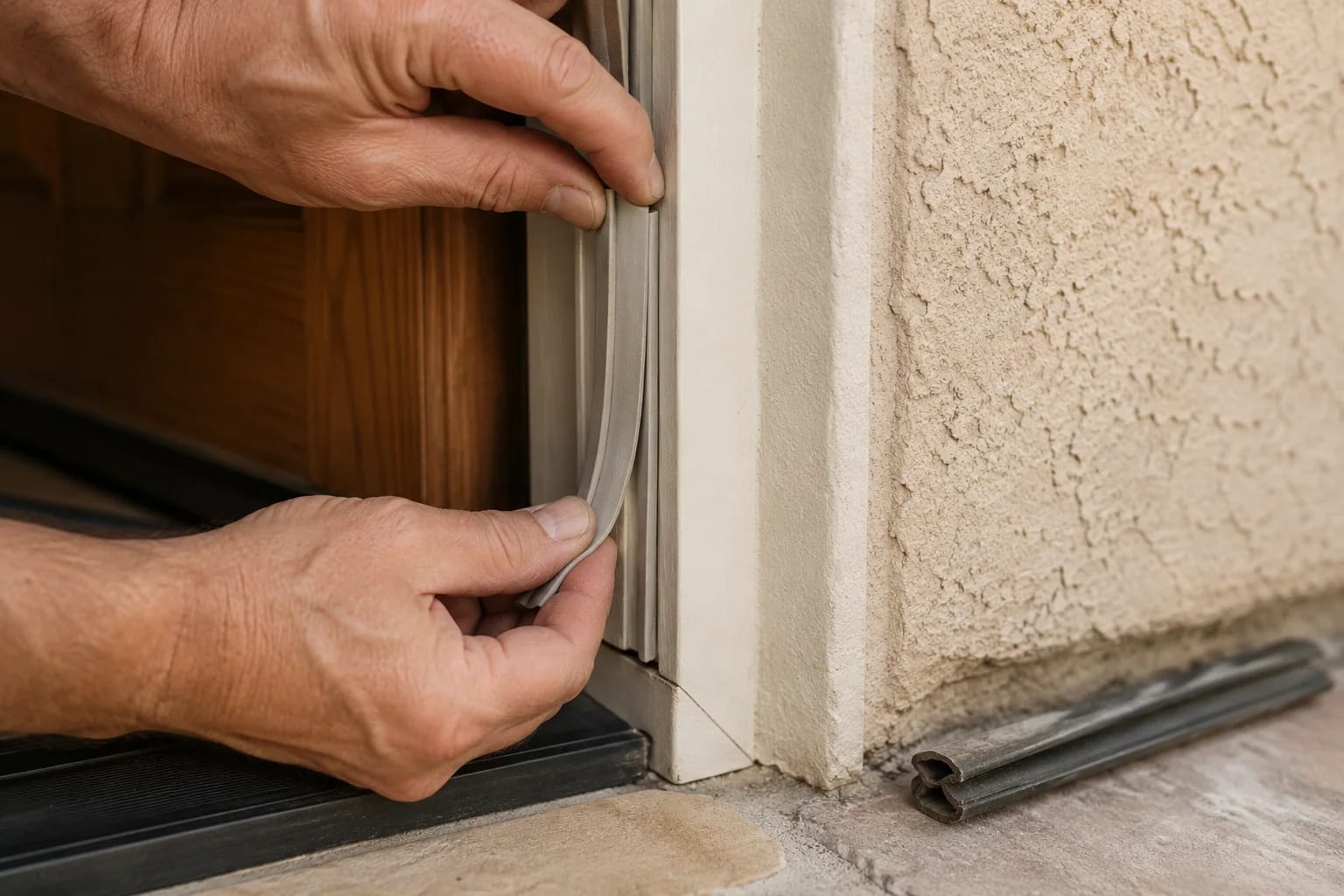
Both fiberglass and steel doors need inspection and cleaning. Painted, stained-look, and clear-coated finishes have different care cycles. Weather stripping, sweeps, thresholds, hinges, and locks may need adjustment or replacement before the slab itself does.
Ask what fading, chalking, rust, cracking, or seal wear looks like and which products are approved for care. Keep drainage paths clear and report recurring water entry or binding rather than repeatedly covering the symptom with sealant.
Use the same comparison questions for each proposal
A written comparison makes the material decision more useful. Include installation and finish details, not just model names.
What are the slab skin, core, edge, frame, and threshold materials?
Which finish and color are approved for this exposure?
What glass, privacy, and safety configuration is included?
How are the frame, hinges, strike, and locks attached?
Which interior and exterior trim and seal work are included?
What care, registration, exclusions, and written warranty terms apply?
Choose for the opening, not the category label
Fiberglass and steel can both be reasonable choices when the complete system fits the opening, exposure, appearance, and maintenance expectations. The better decision is the documented product and installation that address your priorities without unsupported promises.
Renmark can measure entry and patio openings for Arizona homeowners, review verified product options, and explain the installation scope. Bring photos of styles you like and questions about sun, privacy, hardware, and maintenance to the estimate.
Questions related to this guide
Can an existing door opening be reused?
Many replacement doors use the existing rough opening, but it still needs accurate measurement and evaluation. Frame condition, squareness, threshold height, wall construction, sidelites, swing clearance, and water management can affect the recommended unit and whether corrective work is needed.
What should I consider when selecting an entry door?
Consider the opening dimensions, sun and weather exposure, security hardware, glass and privacy, accessibility, swing direction, threshold, finish maintenance, architectural fit, and warranty terms. Also confirm which components are included so you can compare complete installed systems rather than only the door slab.
How do fiberglass and steel entry doors differ?
Fiberglass and steel doors differ in surface construction, appearance options, dent resistance, maintenance needs, exposure considerations, and price. Performance also depends on the core, frame, weather seals, glass, finish, and installation. Compare complete door systems for the specific opening rather than choosing by skin material alone.
Continue your research
DoorsRenmark helps homeowners replace entry, patio, and exterior doors with options designed to improve appearance, function, security, and energy performance.Phoenix service areaRenmark serves Phoenix homeowners as part of its greater Phoenix and surrounding-community service area. Residential attic-insulation evaluations are available by phone so Renmark can confirm the address, attic access, and requested scope.Door Replacement in PhoenixEntry and patio doors should be checked for alignment, threshold condition, weatherstripping, locking, and heat exposure. Frequently used patio openings also need a practical discussion about traffic flow, screens, floor transitions, and daily operation.
Ready to Discuss Your Home?
Tell Renmark what you would like evaluated, and our team will help you understand the condition of your home, available options, and appropriate next steps.