
Resource
Dark vs. Light Entry Doors in Arizona Sun
Compare entry-door colors by sun exposure, finish instructions, material, maintenance, glass, and architectural goals—not color alone.
Renmark Editorial Team · 4 min read · Published Jul 18, 2026 · Reviewed Jul 18, 2026
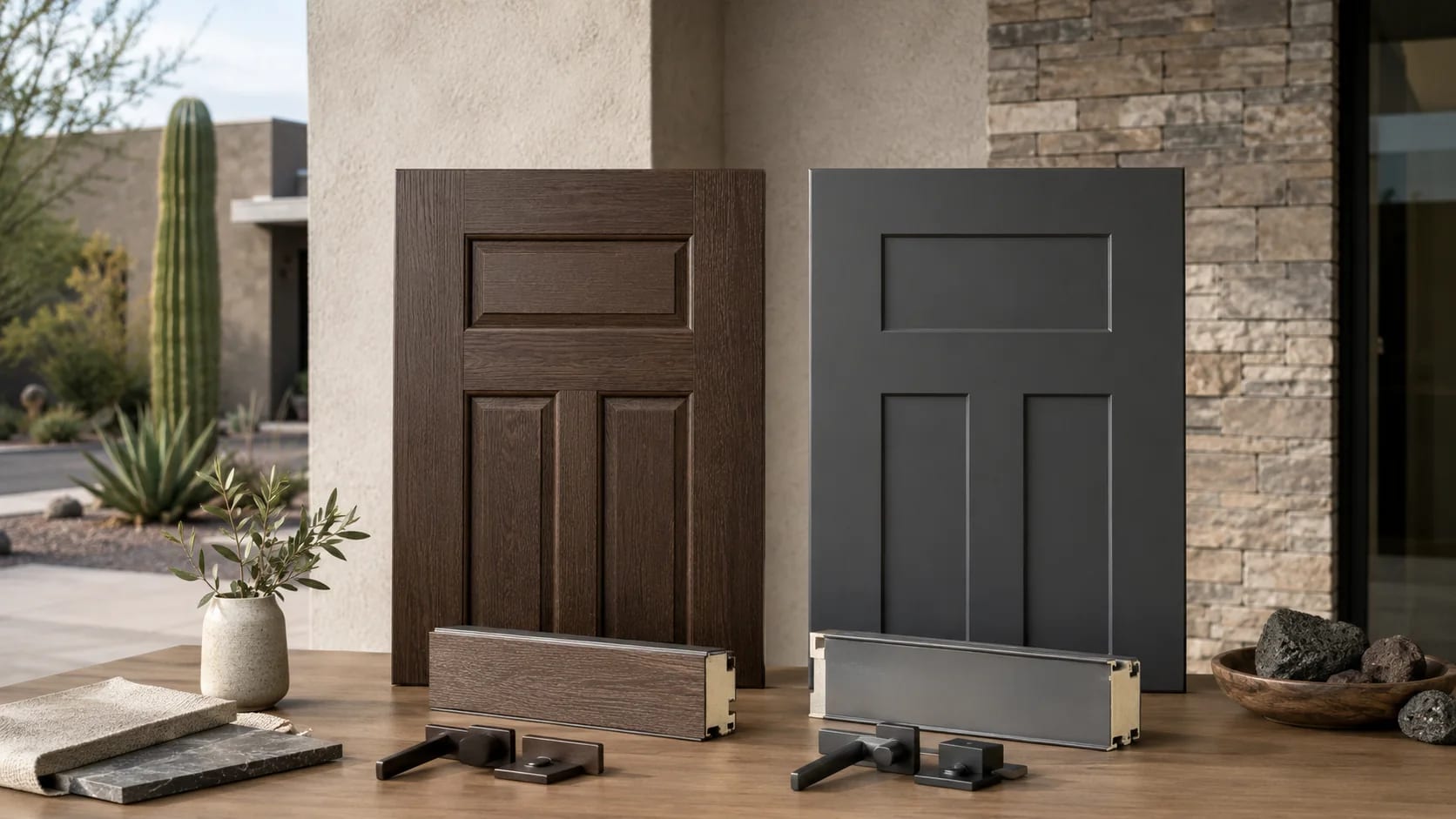
A charcoal, black, or deep-stained entry door can create strong contrast. A lighter painted or wood-tone door can feel quieter and may show dust or wear differently. In Arizona, the useful choice also depends on how much direct sun reaches the opening and whether the selected product and finish are approved for that exposure.
Color influences surface heat, but it is only one part of the door system. Material, core, glass, frame, overhang, orientation, weather seals, finish chemistry, and installation all affect how the opening behaves. Compare the actual product in its planned color rather than relying on a general rule about dark or light doors.
Map the door’s real sun exposure
Observe the opening in the morning and late afternoon during different seasons. A recessed north-facing door may receive little direct sun, while an exposed west-facing door can experience concentrated afternoon light. Nearby walls, paving, metal security doors, and glass can reflect additional heat toward the surface.
Photograph the opening when direct sun is strongest and note the approximate duration. This gives a product specialist better context than the street-facing direction alone and helps identify whether an overhang or sidelight changes the exposure.
Check product and finish limitations before choosing a color
Manufacturers may provide different instructions or coverage conditions based on door material, finish system, storm-door use, overhang, or exposure. Ask for the current written documents that apply to the exact slab, glass, frame, and color under consideration.
Do not assume a field-applied dark paint is equivalent to a factory finish or that every finish is compatible with every door skin. The preparation, coating system, application, and maintenance instructions all matter. Put the selected color and finish responsibility in the project documents.
Understand what color can and cannot tell you
Darker surfaces generally absorb more solar energy than lighter, more reflective surfaces, but actual temperature depends on the complete exposure and finish. A hot exterior surface does not by itself prove the interior will be uncomfortable or the door will fail.
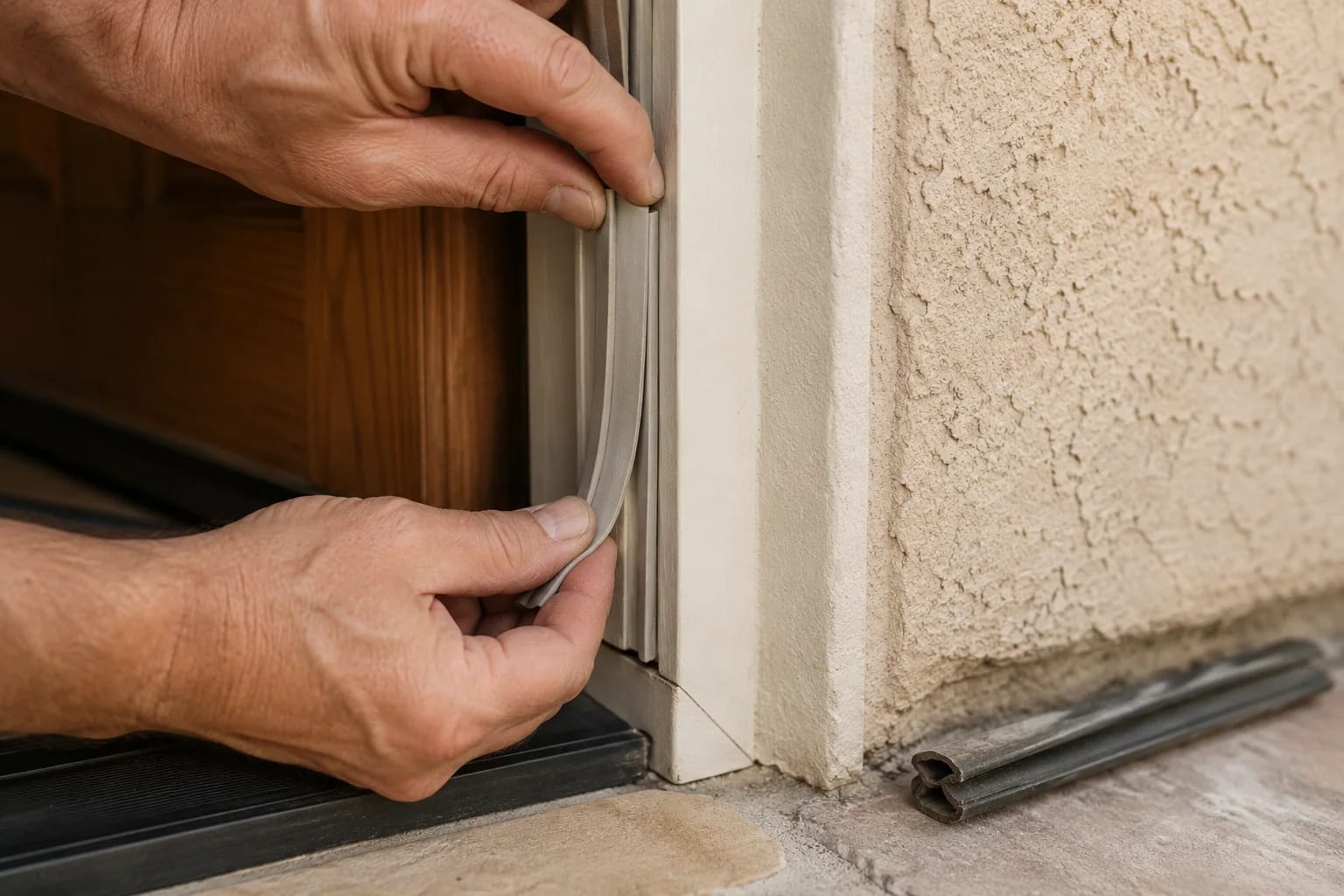
Compare insulated construction, glass area, weather sealing, frame condition, and installation details alongside color. If comfort is a priority, ask for applicable product performance information instead of using surface color as a substitute for the full assembly.
Consider glass, sidelites, and storm doors
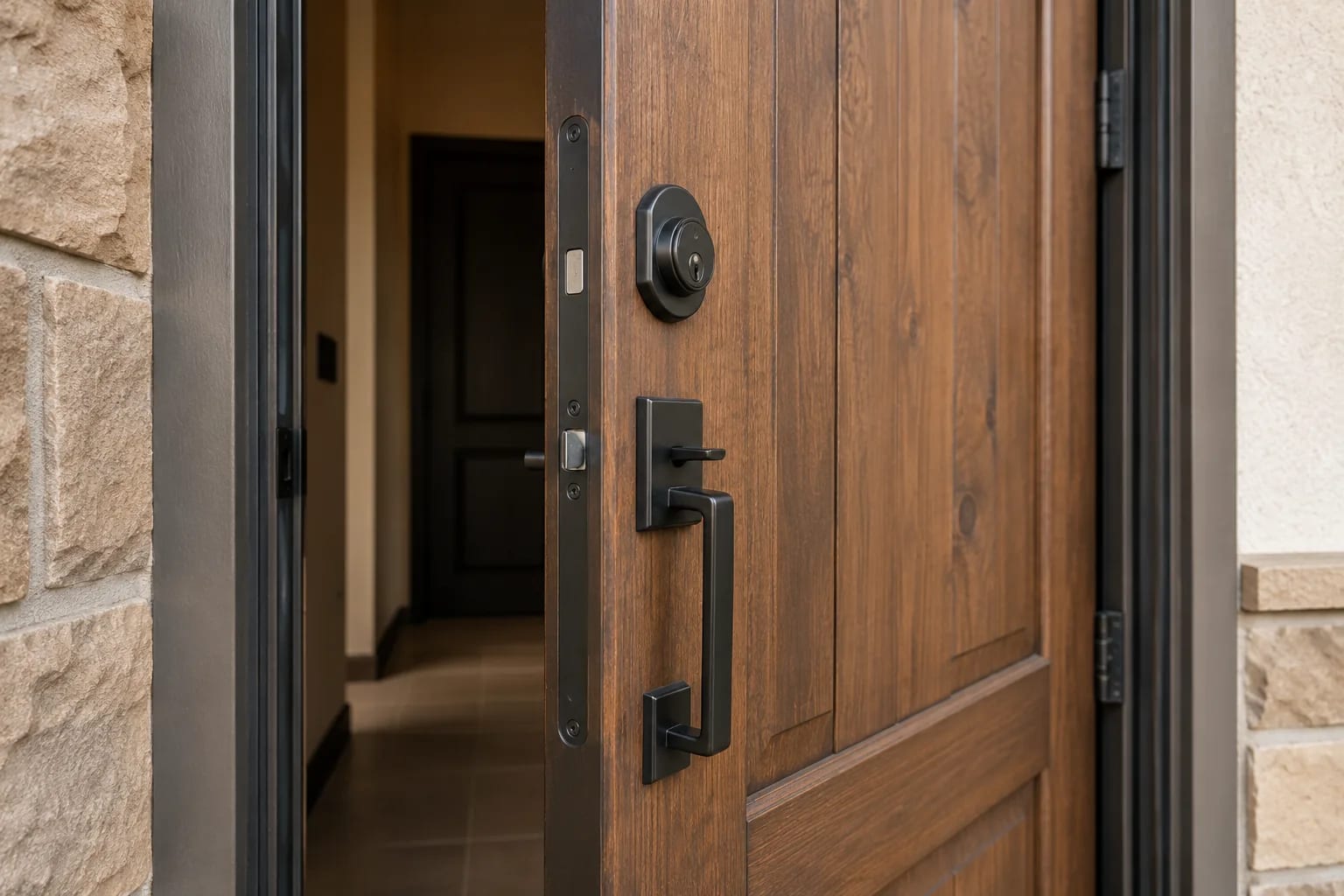
Glass can add daylight and architectural detail, but its size, orientation, coatings, and shading affect the opening’s solar exposure and privacy. Large decorative units and sidelites should be evaluated as part of the selected door system, not as a separate color decision.
An added storm or security door can change the air and heat conditions in front of the entry door. Confirm compatibility with the manufacturer before combining systems, especially at a strongly sun-exposed opening.
Plan for appearance and maintenance
Dark finishes may make pale dust, mineral residue, scratches, or fading more noticeable. Very light finishes may show hand marks, soil, and runoff. Wood-look textures can disguise some variation but still require cleaning and inspection according to the finish instructions.
Use physical samples outdoors at the actual entry when possible. View them in sun and shade against the stucco, trim, roof, and hardware. Screen colors can differ from installed finishes, and a small sample may look different across an entire slab.
Ask the same questions for every color option
A disciplined comparison keeps aesthetics connected to product suitability. Record the exact color and factory or field finish so proposals do not leave that decision ambiguous.
How many hours of direct sun reach the opening, and at what time?
Is the exact color approved for the selected door and exposure?
Does an overhang, glass storm door, or security door affect the guidance?
What cleaning, inspection, and refinishing does the finish require?
Are frame, trim, sealant, and touch-up colors included in the scope?
Choose a complete door system for the opening
The right result is not a universal winner between dark and light. It is a documented color and finish that suit the architecture, actual sun exposure, selected material, maintenance expectations, and manufacturer instructions.
Renmark can evaluate entry doors in Arizona homes and help compare complete door options. Bring inspiration photos, but expect the final discussion to include the opening and installation conditions as well as the color.
Questions related to this guide
What should I consider when selecting an entry door?
Consider the opening dimensions, sun and weather exposure, security hardware, glass and privacy, accessibility, swing direction, threshold, finish maintenance, architectural fit, and warranty terms. Also confirm which components are included so you can compare complete installed systems rather than only the door slab.
How do fiberglass and steel entry doors differ?
Fiberglass and steel doors differ in surface construction, appearance options, dent resistance, maintenance needs, exposure considerations, and price. Performance also depends on the core, frame, weather seals, glass, finish, and installation. Compare complete door systems for the specific opening rather than choosing by skin material alone.
What are common signs an exterior door may need replacement?
Look for difficult operation, recurring gaps, damaged or soft material, a loose frame, water entry, failed hardware mounting, cracked glass, or a door that cannot be adjusted to latch and seal consistently. Some issues can be repaired, so the opening, frame, threshold, and surrounding materials should be evaluated together.
Continue your research
DoorsRenmark helps homeowners replace entry, patio, and exterior doors with options designed to improve appearance, function, security, and energy performance.Phoenix service areaRenmark serves Phoenix homeowners as part of its greater Phoenix and surrounding-community service area. Residential attic-insulation evaluations are available by phone so Renmark can confirm the address, attic access, and requested scope.Tempe service areaRenmark is based in Tempe and serves homeowners throughout the greater Phoenix area and surrounding communities. Residential attic-insulation evaluations are available by phone so Renmark can confirm the address, attic access, and requested scope.Door Replacement in PhoenixEntry and patio doors should be checked for alignment, threshold condition, weatherstripping, locking, and heat exposure. Frequently used patio openings also need a practical discussion about traffic flow, screens, floor transitions, and daily operation.
Ready to Discuss Your Home?
Tell Renmark what you would like evaluated, and our team will help you understand the condition of your home, available options, and appropriate next steps.