
Resource
Signs It May Be Time to Replace an Exterior Door
Learn how operation, frame condition, gaps, water entry, hardware, glass, and exposure help distinguish maintenance from exterior-door replacement.
Renmark Editorial Team · 4 min read · Published Jul 15, 2026 · Reviewed Jul 15, 2026
An exterior door can be annoying before it is truly beyond repair. A loose hinge, worn sweep, latch adjustment, or failed piece of weather stripping may have a focused solution. A deteriorated frame, recurring water entry, badly distorted slab, or insecure hardware connection can require a larger scope.
The goal is to evaluate the complete opening. The slab, frame, threshold, hardware, seals, glass, exterior trim, and surrounding wall work together. Use these signs to organize an inspection, not to make a remote diagnosis.
The door no longer opens, closes, or latches consistently
Seasonal movement and ordinary hardware wear can cause minor changes, but a door that repeatedly drags, swings on its own, scrapes the threshold, or needs force to latch deserves attention. Loose screws may be simple; stripped framing, hinge movement, a distorted slab, or an out-of-square frame is different.
Observe where contact occurs and whether the issue changes through the day. Do not keep moving the strike plate without understanding the cause, especially if the latch no longer engages securely or the door is part of an emergency exit path.
Gaps or light remain after adjustment
A consistent seal depends on frame alignment, slab shape, hinges, weather stripping, sweep, and threshold. Visible light at an edge or a draft may be corrected by an appropriate adjustment or replaceable seal. Uneven gaps around the perimeter can indicate movement or distortion.
Ask the evaluator to show where the seal fails and whether the proposed work restores compression without making operation difficult. Adding layers of generic foam can interfere with latching and does not repair a moving frame.
Water enters at the threshold or frame
Water near a door can come from wind-driven rain, failed perimeter joints, a threshold or sill-pan detail, grade or patio drainage, roof runoff, or another opening above. The visible interior location may not be the original entry point.
Document when the leak appears and from which direction storms arrive. A replacement plan should explain how the new threshold and frame connect to the surrounding construction. Simply installing a new slab in the same damaged frame may leave the water path unchanged.
The frame or slab shows physical deterioration
Soft material, open joints, corrosion, cracks, delamination, broken edges, failed finish, or movement around hardware can reduce the value of repeated adjustments. Surface wear may be maintainable, while damage at hinges, locks, glass, or the threshold can affect safe operation.
Have the opening inspected before concealing deterioration with trim or filler. The scope may need to include frame removal, substrate correction, flashing, or finish repair that is not visible from the slab alone.
Hardware cannot mount securely
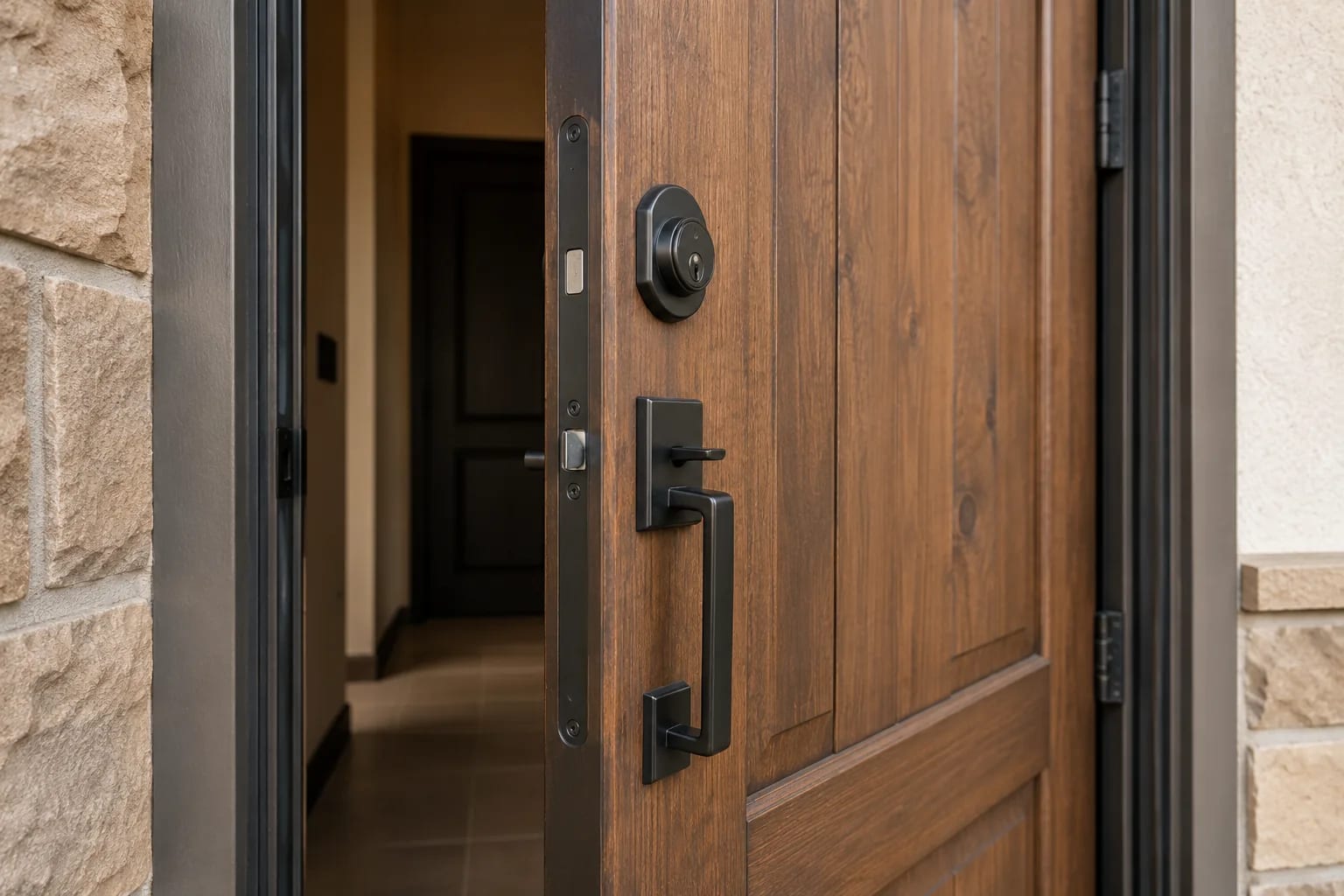
Locks and hinges need solid attachment. Repeatedly loose hardware, cracked frame material, misaligned deadbolts, or a strike that cannot be fastened securely warrants prompt evaluation. The correct solution may involve reinforcement, frame repair, or replacement depending on the condition.
Security is a system. A new lock does not correct a weak frame connection, and a heavy door will not perform well on failing hinges. Ask how the complete assembly will be anchored and adjusted.
Glass, sidelites, or a patio-door system has failed
Cracked glass, moisture between panes, loose glazing, failed rollers, or a patio panel that no longer tracks safely may be serviceable components in some systems. Availability and the condition of the frame determine whether a focused repair is practical.
Safety glazing and secure installation are important around doors. Do not install an unverified glass substitute. Ask for the exact replacement specification and compare it with the complete-door option if parts are obsolete or multiple components are deteriorated.
Prepare useful evidence for the estimate
Photograph gaps, staining, or damaged components and note whether they change with heat, wind, or rain. Identify smart locks, alarm contacts, screens, sidelites, interior flooring transitions, and exterior surfaces that affect the work.
Which operation or seal problem happens every time?
Has the opening leaked, and under which weather conditions?
Does the frame move when the door operates?
Which hardware, glass, privacy, and access features must remain?
Is the finish exposed to sustained direct sun?
What interior and exterior finish work should the estimate include?
Ask for a condition-based recommendation
A useful recommendation separates maintenance, repair, and replacement and explains why. It identifies the observed problem, the components included, the installation method, and the limitations that remain. It does not declare every difficult door irreparable.
If your Arizona home has an exterior or patio door that no longer works as intended, Renmark can evaluate replacement options and document the proposed scope. You can then compare the recommendation with your priorities for operation, appearance, security, and maintenance.
Questions related to this guide
Can weather stripping solve every draft around an exterior door?
Weather stripping can correct some seal gaps, but it cannot solve every cause. A warped slab, loose hinges, damaged threshold, out-of-square frame, deteriorated surrounding material, or installation movement may require adjustment, repair, or replacement. Identifying where air or water enters is the useful first step.
Can an existing door opening be reused?
Many replacement doors use the existing rough opening, but it still needs accurate measurement and evaluation. Frame condition, squareness, threshold height, wall construction, sidelites, swing clearance, and water management can affect the recommended unit and whether corrective work is needed.
What are common signs an exterior door may need replacement?
Look for difficult operation, recurring gaps, damaged or soft material, a loose frame, water entry, failed hardware mounting, cracked glass, or a door that cannot be adjusted to latch and seal consistently. Some issues can be repaired, so the opening, frame, threshold, and surrounding materials should be evaluated together.
Continue your research
Ready to Discuss Your Home?
Tell Renmark what you would like evaluated, and our team will help you understand the condition of your home, available options, and appropriate next steps.