
Resource
An Annual Exterior Maintenance Calendar for Arizona Homes
Use a simple Arizona-focused calendar to observe windows, doors, roofing, drainage, seals, and storm changes before small concerns lose their context.
Renmark Editorial Team · 4 min read · Published Jul 18, 2026 · Reviewed Jul 18, 2026
Exterior maintenance is easier to manage as a short recurring routine than as one large annual project. Arizona homes experience strong sun, wide surface-temperature changes, dust, wind, and seasonal rain. Looking at the same components at useful points in the year helps reveal change while the weather context is still clear.
This calendar is an observation framework, not a claim that every product needs service on the same schedule. Follow manufacturer instructions and the home’s actual conditions. Use qualified professionals for roof access, major repairs, hazardous materials, electrical work, structural concerns, and tasks beyond your experience.
Winter: review operation, seals, and records
Milder weather is a practical time to operate accessible windows and exterior doors, clean normal dust from tracks and thresholds, and note latches, balances, hinges, and locks that do not work consistently. Inspect accessible weather seals for gaps or damage without blocking designed drainage openings.
Organize prior invoices, product documents, finish instructions, and photographs. Create a room-by-room list of concerns and record which openings receive winter condensation or noticeable air movement. That baseline will be useful when summer exposure changes how the same rooms feel.
Spring: prepare drainage and loose exterior items
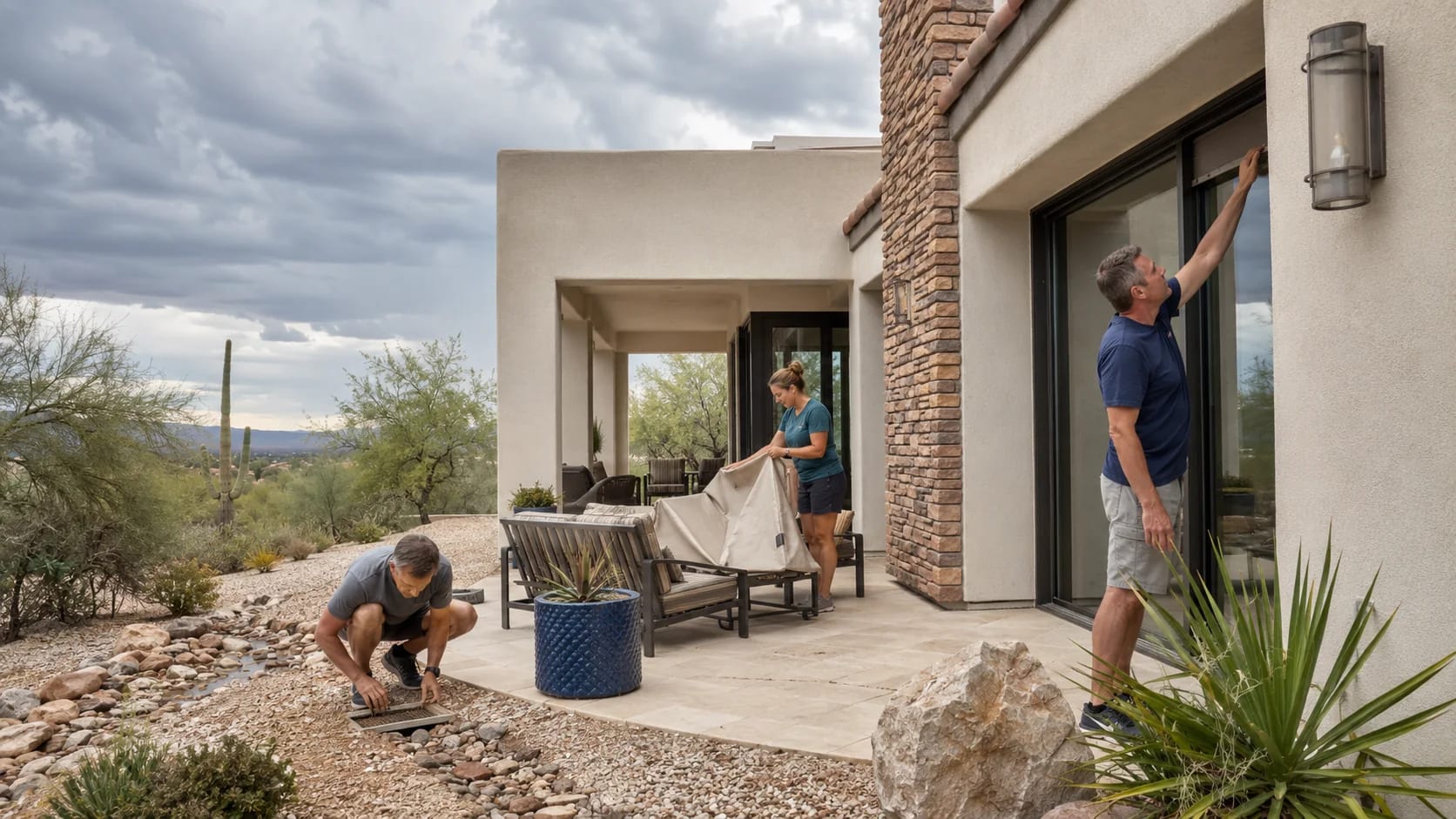
Before monsoon urgency, walk normal ground-level areas and identify roof and surface drainage outlets that are visibly blocked by ordinary debris. Review patio storage, gates, fences, screens, shade products, and landscape branches for conditions that could worsen in outflow winds.
Look at roof edges and planes from safe viewpoints for shifted materials, debris, or changes since winter. Schedule professional review rather than climbing onto the roof. Spring also provides time to address recurring window and door operation problems before dust and storms make the symptoms harder to separate.
Early summer: observe sun exposure and finishes
As sun angles and temperatures change, note which windows and doors receive strong morning or afternoon exposure. Look for finish changes, separated sealant at visible joints, difficult operation, hot rooms, or shading that no longer functions. Surface heat alone is not a diagnosis, so record the full pattern.
Review manufacturer cleaning and finish-care instructions before applying coatings or chemicals. Do not paint weather seals, drainage paths, hardware, or moving joints unless the product documentation calls for it. Strongly exposed doors and frames may need a different maintenance conversation from shaded openings.
Monsoon season: document events and respond safely
Before forecast storms, close and latch openings, secure lightweight outdoor items, and keep drainage routes clear from safe ground locations. During lightning, wind, dust, or flooding, stay inside and defer inspection. Never climb onto a wet or storm-exposed roof.
After conditions pass, photograph new debris, water stains, displaced materials, or operation changes before cleanup when safe. Note the date and type of weather without assuming cause. Repeated patterns are more useful to an evaluator than a vague memory at the end of the season.
Fall: compare the home with the beginning-of-year baseline
Review winter photographs and notes alongside current conditions. Check whether previously minor seal gaps, finish changes, roof clues, or drainage concerns have progressed. Operate windows and doors again and confirm that storm debris is not left in tracks, thresholds, or accessible outlets.
Use the comparison to prioritize work: active water entry and safety concerns first, then conditions that are worsening, followed by planned appearance or comfort improvements. Grouping related openings may help planning, but replacement scope should still reflect condition and project goals.
Keep the calendar short enough to use
A recurring reminder and one property folder are usually more useful than a complex checklist that is abandoned. Add product-specific tasks only when the manufacturer or a qualified professional identifies them.
Record the date, weather context, location, and visible condition
Take wide and detail photographs from safe locations
Keep receipts, product labels, reports, and changed estimates together
Track whether a symptom is stable, recurring, or progressing
Set a follow-up date instead of relying on memory
Know when maintenance becomes an evaluation question
Active leaks, sagging materials, broken glass, unreliable egress, loose entry hardware, structural movement, or substantial storm damage require prompt attention. Persistent air or dust paths, difficult operation, between-pane haze, and recurring roof or wall stains also deserve condition-based evaluation even when they are not emergencies.
Renmark can review residential windows, exterior doors, and roofing for homes across Arizona. Bring the calendar notes and photographs to an estimate so the conversation can focus on how the condition changed and what scope fits the evidence.
Questions related to this guide
What are signs a roof should be inspected?
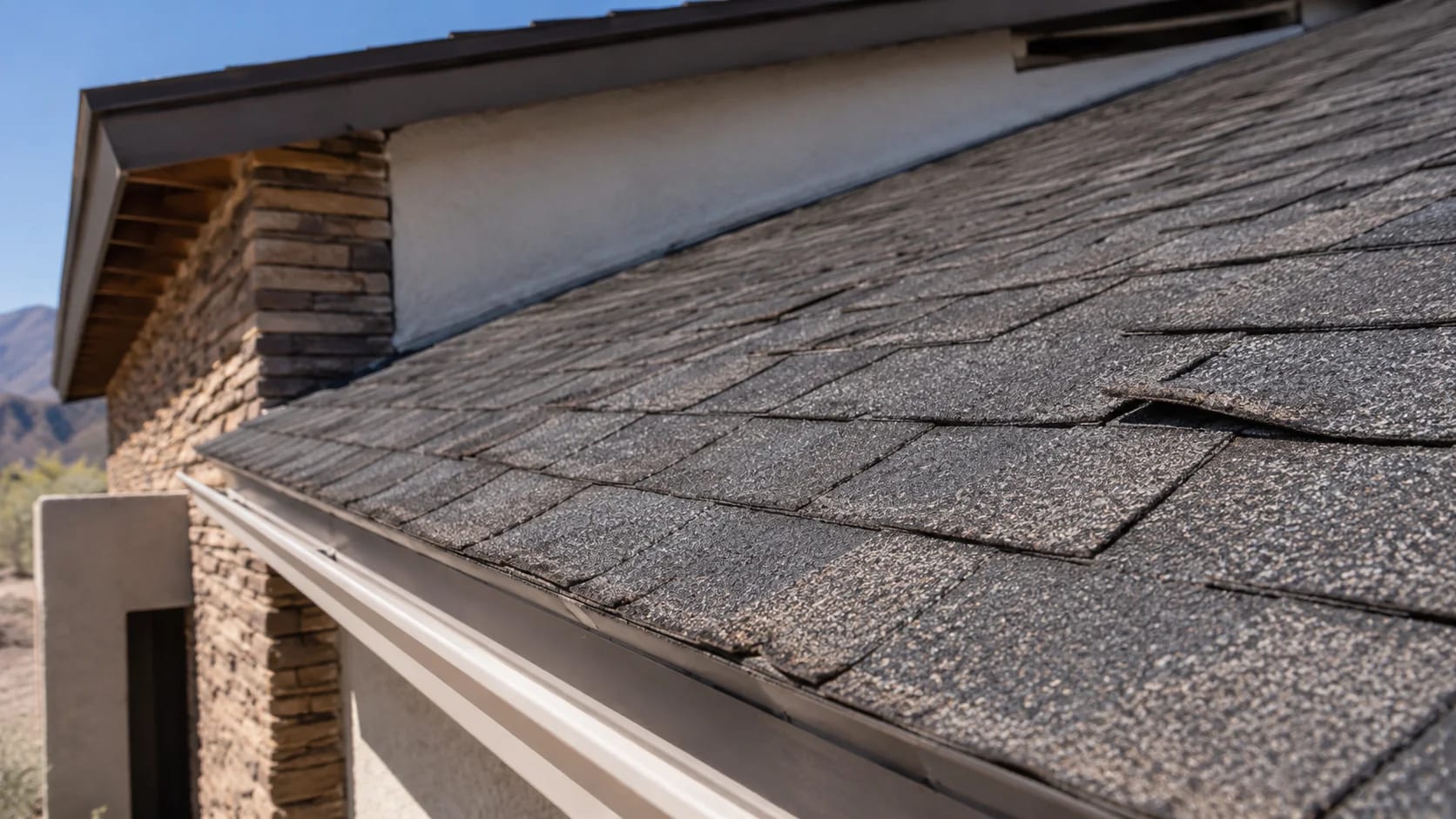
Reasons to request an inspection include active or suspected leaks, displaced or broken materials, visible flashing damage, unusual debris after wind, sagging areas, recurring ceiling stains, or a roof nearing the expected service range for its system. These signs call for evaluation, not an automatic assumption that full replacement is required.
What are common signs an exterior door may need replacement?
Look for difficult operation, recurring gaps, damaged or soft material, a loose frame, water entry, failed hardware mounting, cracked glass, or a door that cannot be adjusted to latch and seal consistently. Some issues can be repaired, so the opening, frame, threshold, and surrounding materials should be evaluated together.
What are common signs windows may need replacement?
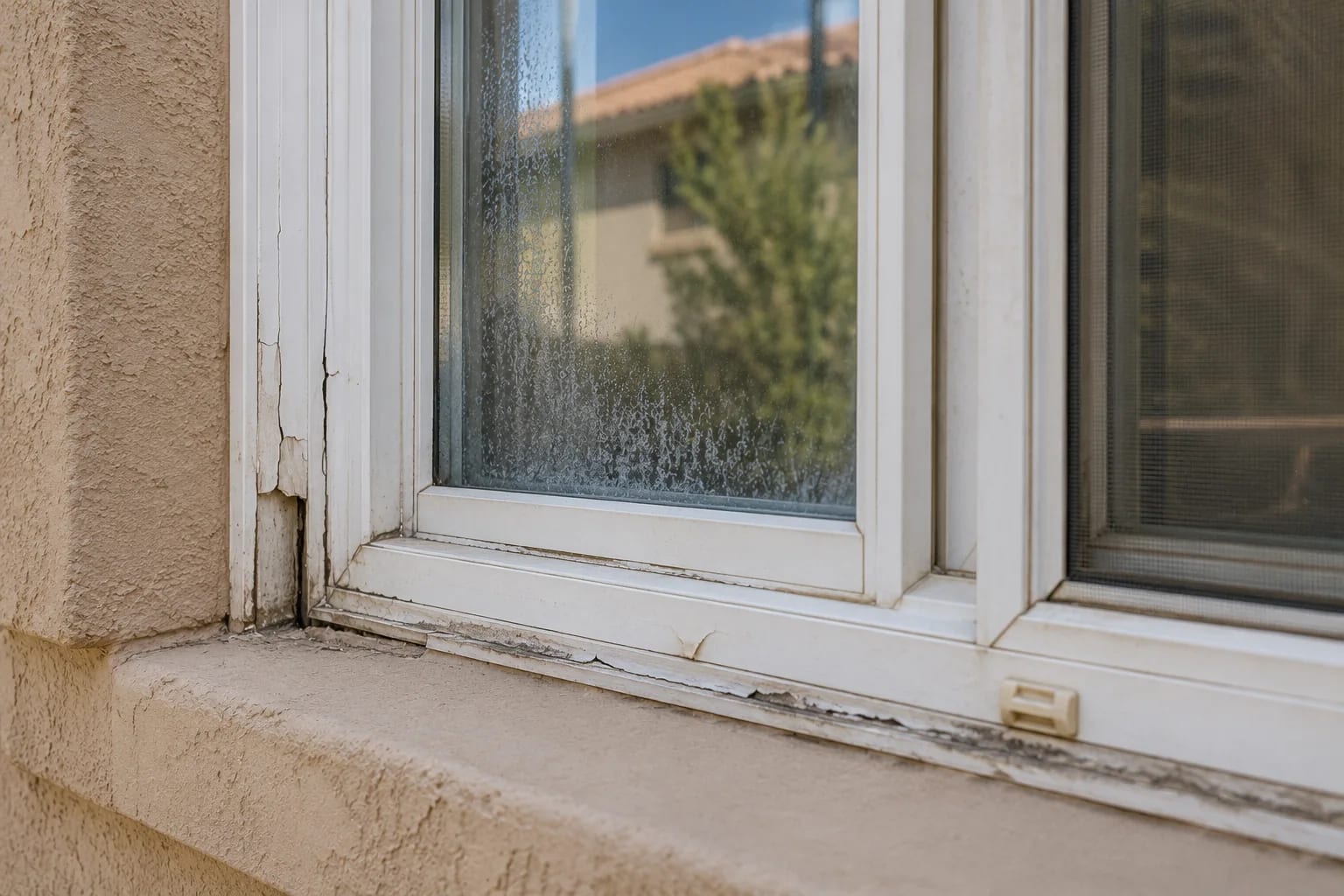
Possible signs include difficult operation, damaged frames, recurring water entry, drafts caused by a poor seal, persistent condensation between panes, or glass and hardware that no longer perform as intended. One symptom does not automatically mean every window needs replacement; an on-site evaluation can separate repairable issues from broader deterioration.
Continue your research
WindowsRenmark helps Arizona homeowners upgrade old, inefficient, or damaged windows with professionally installed replacement windows designed for comfort, curb appeal, and long-term performance.DoorsRenmark helps homeowners replace entry, patio, and exterior doors with options designed to improve appearance, function, security, and energy performance.RoofingRenmark helps Arizona homeowners navigate roof replacement with clear project coordination, product guidance, installation scheduling, and warranty support.Phoenix service areaRenmark serves Phoenix homeowners as part of its greater Phoenix and surrounding-community service area. Residential attic-insulation evaluations are available by phone so Renmark can confirm the address, attic access, and requested scope.Tempe service areaRenmark is based in Tempe and serves homeowners throughout the greater Phoenix area and surrounding communities. Residential attic-insulation evaluations are available by phone so Renmark can confirm the address, attic access, and requested scope.
Ready to Discuss Your Home?
Tell Renmark what you would like evaluated, and our team will help you understand the condition of your home, available options, and appropriate next steps.