
Resource
A Pre-Monsoon Exterior Checklist for Arizona Homeowners
Prepare the home exterior before monsoon weather by reviewing drainage, loose objects, trees, roof clues, windows, doors, records, and a safe post-storm plan.
Renmark Editorial Team · 4 min read · Published Jul 18, 2026 · Reviewed Jul 18, 2026
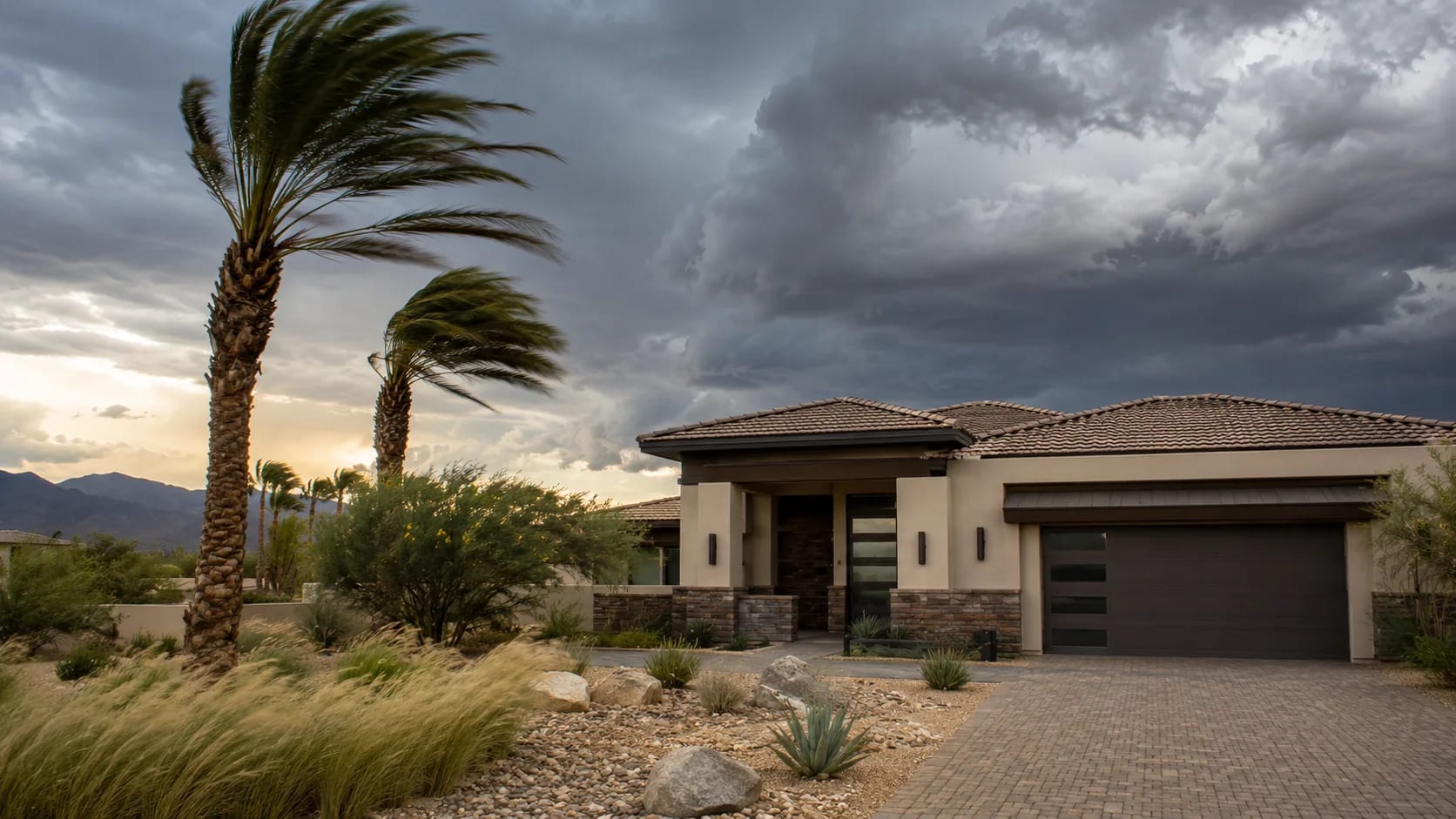
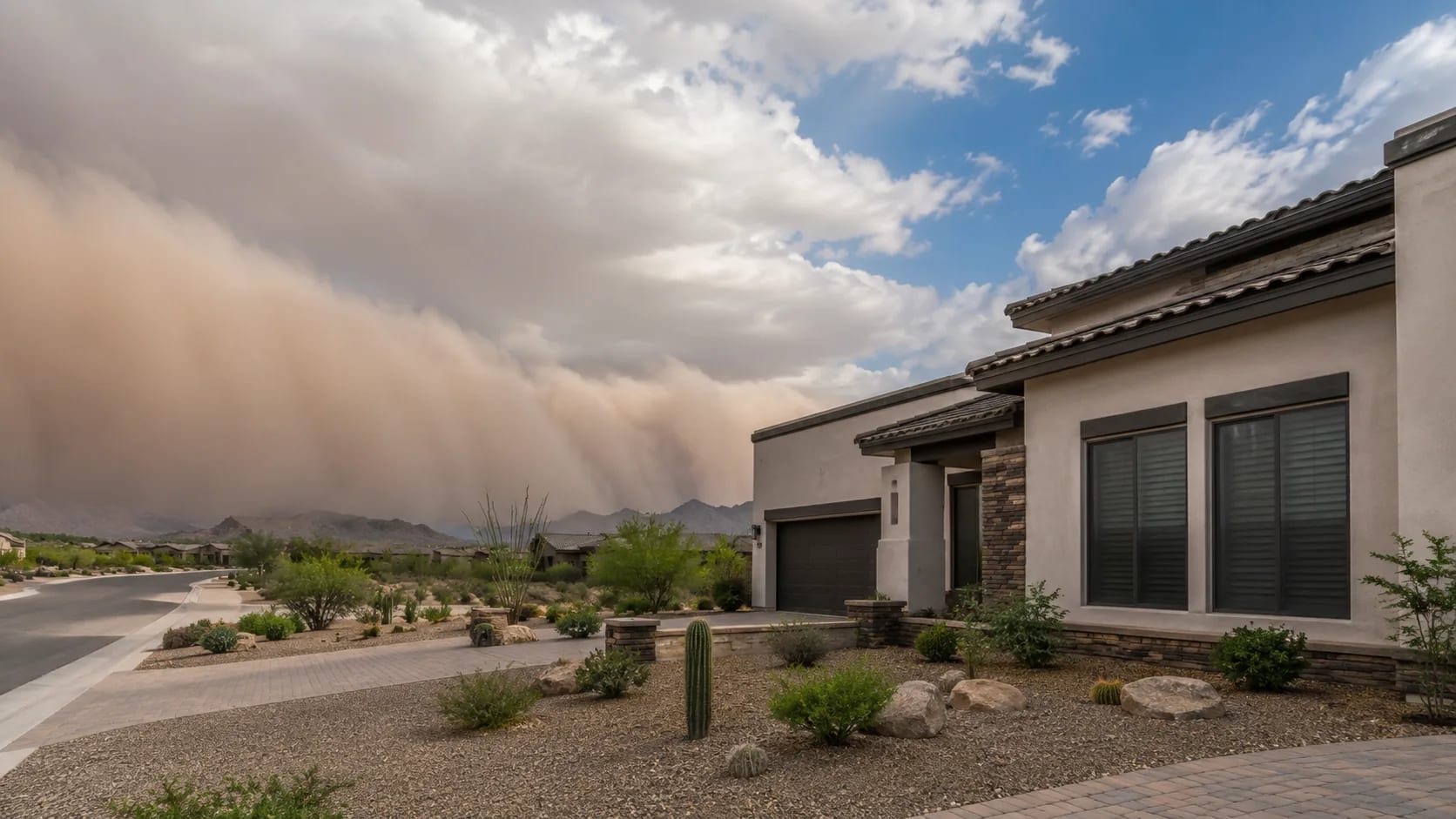
Monsoon preparation is most useful before the first urgent forecast. Arizona storms can combine strong outflow wind, dust, lightning, and concentrated rain, exposing loose items and drainage or sealing problems that were easy to overlook during dry weather.
This checklist focuses on observations and ordinary property organization a homeowner can perform from safe locations. Roof access, major tree work, electrical issues, structural concerns, and repairs beyond your experience belong with qualified professionals.
Start with the path water should take
Walk the property from normal ground surfaces and identify where roof and surface water are intended to go. Look for visible debris at accessible drains, scuppers, downspout outlets, channels, and low areas. Make sure stored items, landscaping material, and recent work have not blocked obvious paths.
Do not climb onto the roof or enter a flooded area to clear a drain during a storm. If water has previously collected against the home, entered openings, or overwhelmed roof drainage, arrange an evaluation before the season rather than relying on last-minute clearing.
Secure objects before wind arrives
Patio chairs, umbrellas, lightweight planters, toys, tools, and loose decorations can move during an outflow. Create a practical storage or restraint plan that does not block exits, gates, drainage, or equipment access. Close retractable shades and umbrellas according to their instructions.
Inspect fences, screens, gates, and shade structures from the ground for loose components. Significant movement, damaged posts, or questionable anchors need appropriate repair; tying an unstable structure to the house is not a safe substitute.
Review trees without attempting hazardous trimming
Look for dead limbs, branches contacting the roof, splits, severe lean, or recently loosened soil. Keep the area beneath a questionable tree clear and arrange qualified tree assessment when needed. Utility-line conflicts should be reported to the utility rather than approached by a homeowner.
Routine landscape cleanup can also keep leaves and small debris from collecting at drainage outlets. Avoid aggressive trimming immediately before a storm if it leaves heavy debris unsecured or requires unsafe ladder and cutting work.
Check roof clues from the ground
Use safe viewpoints to note shifted or missing roof material, lifted edges, cracked tiles, loose flashing, damaged vent covers, or debris left from prior work. Interior ceiling stains, attic odors, and previous leak locations should be recorded even if currently dry.
Schedule roof review when these clues recur or the source is unclear. Do not walk the roof to apply caulk or reset materials; foot traffic and an incorrect repair can create damage and may not address the water path.
Operate and inspect windows and exterior doors
Close, latch, and operate representative windows and doors. Check accessible seals, sweeps, thresholds, and frames for gaps, damage, or deterioration. Clean normal dust and debris according to product guidance while leaving designed window and door drainage paths open.
A product that binds, will not latch, shows soft material, or leaks repeatedly deserves evaluation. New weather stripping may help a worn removable seal, but it will not correct every warped slab, loose frame, failed glass unit, or wall-interface problem.
Prepare records and a post-storm routine
Photograph the major sides of the home and known concern areas during calm weather. Keep contractor, insurer, utility, and property-management contacts available. Know where occupants will stay during severe weather and how you will keep pets indoors without blocking egress.
Record known roof, window, door, and drainage concerns before storms
Choose secure storage for patio and yard items
Keep flashlights and alerts available without relying on outdoor inspection
Wait for lightning, wind, and flooding hazards to pass before checking outside
Photograph any change before cleanup or temporary work when safe
Prioritize conditions that affect people or active water entry
During and after a storm, stay away from downed lines, flooded electrical equipment, unstable trees, sagging ceilings, and visibly damaged structures. Contact emergency services, the utility, or the relevant qualified professional as the condition requires.
For planned exterior work, Renmark can evaluate residential windows, exterior doors, and roofing across Arizona. A pre-season appointment is most useful when you identify the specific openings, roof areas, or recurring symptoms you want reviewed.
Questions related to this guide
What are signs a roof should be inspected?
Reasons to request an inspection include active or suspected leaks, displaced or broken materials, visible flashing damage, unusual debris after wind, sagging areas, recurring ceiling stains, or a roof nearing the expected service range for its system. These signs call for evaluation, not an automatic assumption that full replacement is required.
What are common signs an exterior door may need replacement?
Look for difficult operation, recurring gaps, damaged or soft material, a loose frame, water entry, failed hardware mounting, cracked glass, or a door that cannot be adjusted to latch and seal consistently. Some issues can be repaired, so the opening, frame, threshold, and surrounding materials should be evaluated together.
What are common signs windows may need replacement?
Possible signs include difficult operation, damaged frames, recurring water entry, drafts caused by a poor seal, persistent condensation between panes, or glass and hardware that no longer perform as intended. One symptom does not automatically mean every window needs replacement; an on-site evaluation can separate repairable issues from broader deterioration.

Continue your research
WindowsRenmark helps Arizona homeowners upgrade old, inefficient, or damaged windows with professionally installed replacement windows designed for comfort, curb appeal, and long-term performance.DoorsRenmark helps homeowners replace entry, patio, and exterior doors with options designed to improve appearance, function, security, and energy performance.RoofingRenmark helps Arizona homeowners navigate roof replacement with clear project coordination, product guidance, installation scheduling, and warranty support.Phoenix service areaRenmark serves Phoenix homeowners as part of its greater Phoenix and surrounding-community service area. Residential attic-insulation evaluations are available by phone so Renmark can confirm the address, attic access, and requested scope.Tempe service areaRenmark is based in Tempe and serves homeowners throughout the greater Phoenix area and surrounding communities. Residential attic-insulation evaluations are available by phone so Renmark can confirm the address, attic access, and requested scope.
Ready to Discuss Your Home?
Tell Renmark what you would like evaluated, and our team will help you understand the condition of your home, available options, and appropriate next steps.