
Resource
How to Prepare Your Home for a Haboob or Dust Storm
Reduce avoidable dust entry and wind hazards by closing the home deliberately, securing outdoor items, protecting indoor air, and planning a safe inspection afterward.
Renmark Editorial Team · 4 min read · Published Jul 18, 2026 · Reviewed Jul 18, 2026
A haboob is a fast-moving wall of dust carried by strong outflow wind. Visibility can fall quickly, outdoor objects can move, and fine dust can find ordinary leakage paths around a home. Preparation should happen while conditions are calm, not when the dust wall reaches the neighborhood.
No normal house is completely airtight or dustproof. The practical goal is to close intended openings, avoid creating unsafe pressure or ventilation conditions, secure loose property, and identify recurring window, door, or roof conditions that deserve later evaluation.
Move indoors early and follow official alerts
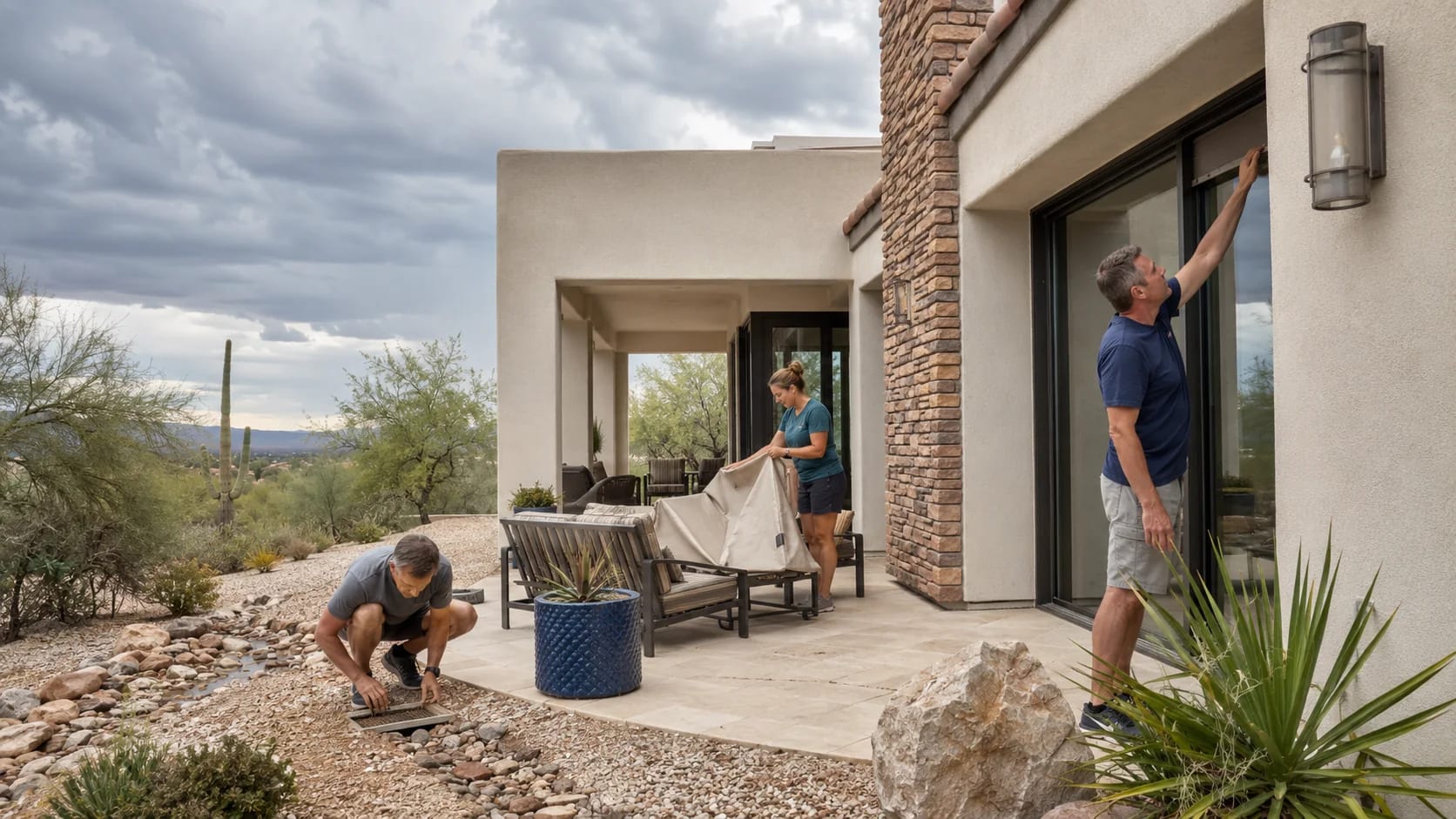
If a dust storm is approaching, bring people and pets inside before visibility and air quality deteriorate. Close exterior doors and windows, and avoid going back outside for nonessential items once strong wind or dust arrives. Follow current local public-safety and weather guidance.
Drivers need a separate safety plan; home-preparation guidance does not apply on the road. Do not stop in a travel lane or attempt to race the storm home. Use official transportation and emergency instructions for the conditions you encounter.
Close windows and doors deliberately
Check that operable windows are fully seated and latched and exterior doors close against their seals. Locking hardware may pull some products into their designed weather seals. Do not force a binding sash or door; secure the area as practical and have a recurring operation problem evaluated after the event.
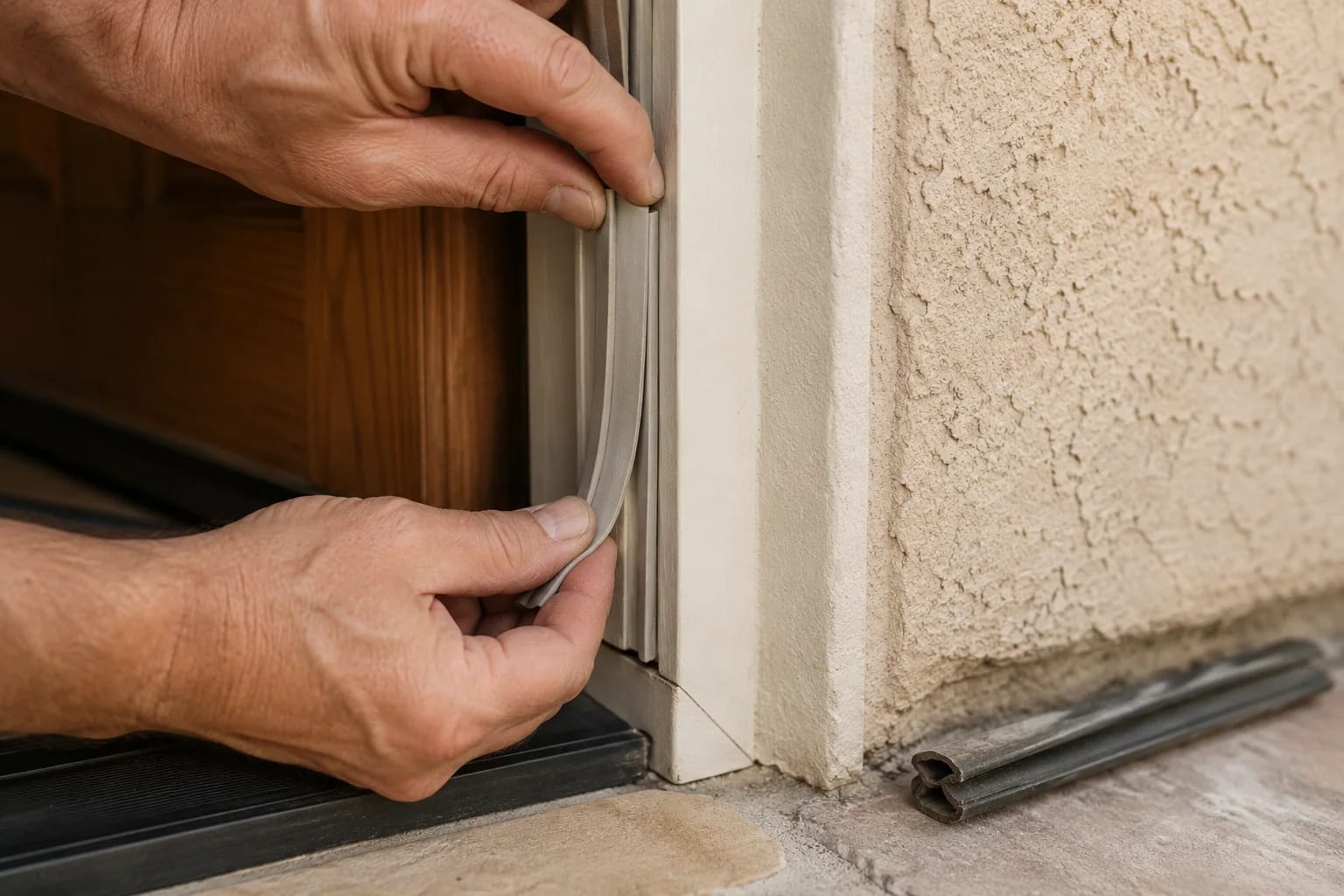
Look at accessible weather stripping, sweeps, and thresholds during calm weather. Replace only compatible maintenance parts and keep designed drainage paths open. Taping over weep holes, combustion-air openings, or unknown vents can interfere with systems that need to function.
Use mechanical systems according to their instructions
Review the home’s HVAC and ventilation controls before storm season so you know what can be adjusted safely. Some equipment brings in outdoor air, while other systems primarily recirculate indoor air. Product documentation or an HVAC professional can explain the correct setting for your equipment.
Keep appropriate replacement filters available and install only the size and type the system accepts. An overly restrictive or incorrectly fitted filter is not an improvement. People with health concerns should follow guidance from medical and public-health sources about dust exposure and indoor air.
Secure outdoor items before the outflow arrives
Store or secure patio furniture, umbrellas, toys, tools, and loose decorations while the weather is calm. Close gates and retract shade products according to their instructions. Keep exits, equipment clearances, and drainage routes open.
Do not attempt major tree work or climb onto a roof as a storm approaches. A loose branch, unstable shade structure, or damaged fence should be assessed in advance by the appropriate qualified professional.
Expect some dust and note where it concentrates
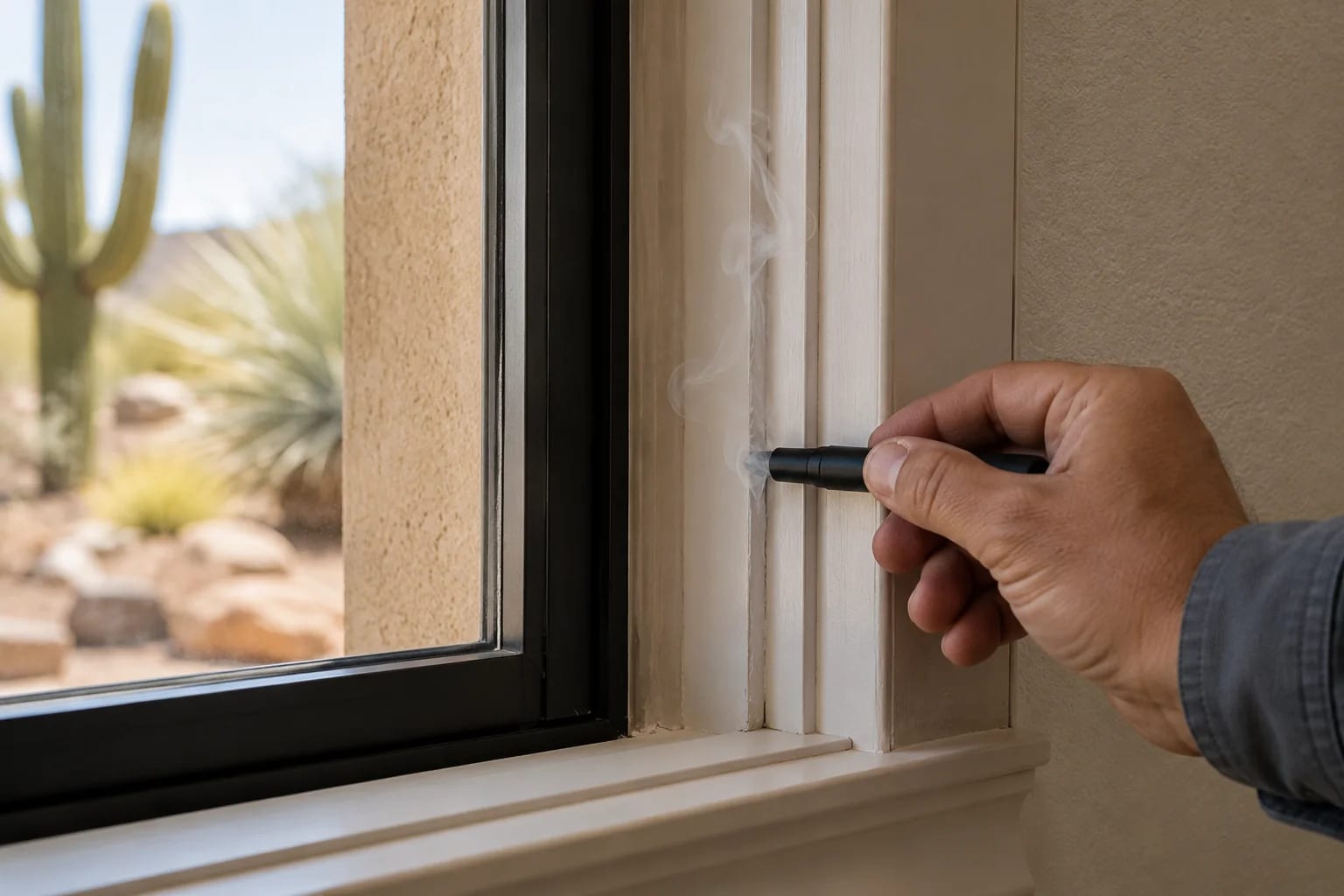
A small amount of dust after a severe event does not identify a failed window or door. Look for repeated piles or streaks at the same sash edge, threshold, frame corner, outlet, or trim seam. Compare the pattern across several storms and photograph it before cleaning.
Recurring concentrated dust can help an evaluator locate an air path, but dust may travel through walls or mechanical systems as well as openings. Ask for a diagnosis rather than assuming new caulk or full replacement is the only response.
Inspect safely after the dust and wind pass
Wait until official warnings and immediate hazards have cleared. From safe ground surfaces, look for fallen branches, displaced roof or yard materials, damaged screens, and windows or doors that no longer operate normally. Stay away from power lines, unstable structures, and areas with poor visibility.
Photograph new damage before cleanup when safe
Check ceilings and known leak areas if rain accompanied the dust
Replace HVAC filters only as directed for the system and conditions
Clean tracks and seals using product-appropriate methods
Schedule evaluation for recurring dust paths, damage, or operation changes
Turn repeated storm symptoms into a focused project scope
A useful exterior evaluation identifies the affected component and distinguishes ordinary maintenance from damaged seals, frames, hardware, roof materials, or installation interfaces. It should also state when another trade is needed for HVAC, structural, electrical, or environmental concerns.
Renmark can evaluate windows, exterior doors, and residential roofing for Arizona homeowners. Describe where dust, movement, or water appears and whether the symptom is storm-specific so the inspection can focus on evidence instead of a generic product recommendation.
Questions related to this guide
Can weather stripping solve every draft around an exterior door?
Weather stripping can correct some seal gaps, but it cannot solve every cause. A warped slab, loose hinges, damaged threshold, out-of-square frame, deteriorated surrounding material, or installation movement may require adjustment, repair, or replacement. Identifying where air or water enters is the useful first step.
What are signs a roof should be inspected?
Reasons to request an inspection include active or suspected leaks, displaced or broken materials, visible flashing damage, unusual debris after wind, sagging areas, recurring ceiling stains, or a roof nearing the expected service range for its system. These signs call for evaluation, not an automatic assumption that full replacement is required.
What are common signs windows may need replacement?
Possible signs include difficult operation, damaged frames, recurring water entry, drafts caused by a poor seal, persistent condensation between panes, or glass and hardware that no longer perform as intended. One symptom does not automatically mean every window needs replacement; an on-site evaluation can separate repairable issues from broader deterioration.
Continue your research
WindowsRenmark helps Arizona homeowners upgrade old, inefficient, or damaged windows with professionally installed replacement windows designed for comfort, curb appeal, and long-term performance.DoorsRenmark helps homeowners replace entry, patio, and exterior doors with options designed to improve appearance, function, security, and energy performance.RoofingRenmark helps Arizona homeowners navigate roof replacement with clear project coordination, product guidance, installation scheduling, and warranty support.Phoenix service areaRenmark serves Phoenix homeowners as part of its greater Phoenix and surrounding-community service area. Residential attic-insulation evaluations are available by phone so Renmark can confirm the address, attic access, and requested scope.Tempe service areaRenmark is based in Tempe and serves homeowners throughout the greater Phoenix area and surrounding communities. Residential attic-insulation evaluations are available by phone so Renmark can confirm the address, attic access, and requested scope.
Ready to Discuss Your Home?
Tell Renmark what you would like evaluated, and our team will help you understand the condition of your home, available options, and appropriate next steps.