
Resource
How to Check for Window Air Leaks in an Arizona Home
Learn how to separate a true window air leak from hot glass, moving room air, and other comfort issues before deciding what needs attention.
Renmark Editorial Team · 4 min read · Published Jul 18, 2026 · Reviewed Jul 18, 2026
Feeling air near a window is useful evidence, but it is not a complete diagnosis. The sensation may come from outside air moving through a gap, indoor air circulating across cooler glass, a supply register, or leakage at trim and wall joints rather than through the window itself.
Arizona conditions make the distinction important. A sun-exposed frame can feel very warm, while a clear desert night can cool the glass enough to create a downward current indoors. Start by recording where and when the discomfort occurs, then use safe observations to narrow the possibilities before discussing repair or replacement.
Start with the pattern, not a one-time sensation
Note the room, opening, weather, time of day, and whether the heating or cooling system was running. A gap that becomes noticeable during wind suggests a different path than a warm surface that appears only during late-afternoon sun. Compare opposite sides of the same window and nearby openings under similar conditions.
Also check whether the sash is fully closed and latched. A latch often pulls an operable sash into its seals; a window can look closed without being seated correctly. Clean loose dust from accessible tracks according to the product instructions, but do not dismantle balances, hinges, or fixed glazing to investigate a draft.
Look at the places air commonly travels
Air may move at the meeting rails, sash edges, corners, hardware penetrations, or the joint between the frame and interior trim. It can also enter through a nearby outlet, baseboard, or wall joint and simply be noticed at the window. A dusty streak at one seam or a lightweight curtain that moves during wind can help identify a pattern, but neither establishes the full cause.
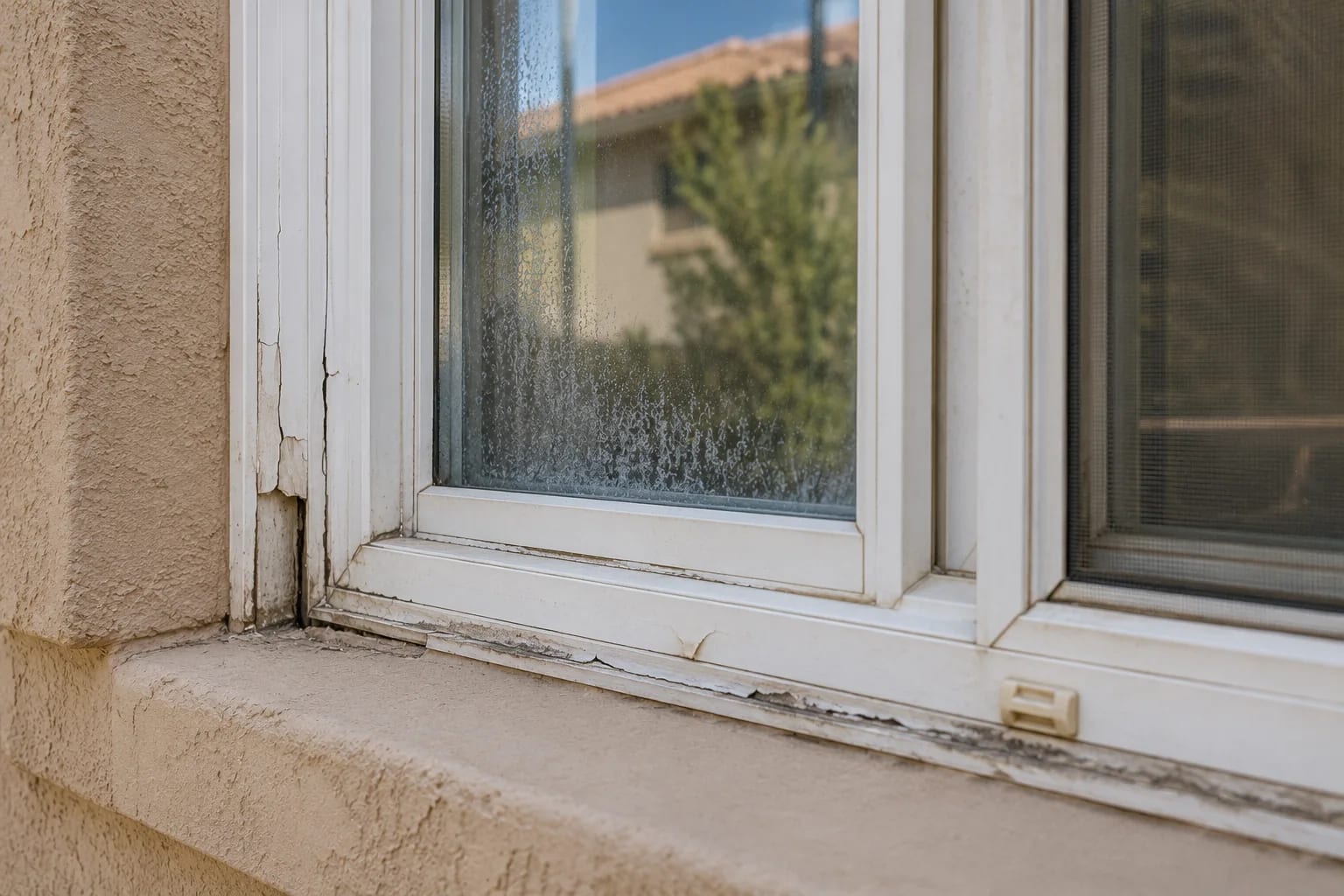
Inspect accessible weather seals for gaps, brittleness, tearing, or sections pulled out of position. Look for separated caulk at trim, loose stops, or visible frame movement. Leave drainage openings unobstructed; covering a designed weep path can interfere with how the window manages water.
Use safe observations and leave diagnostic smoke to trained evaluators
Homeowners can use the back of a clean, dry hand near a seam, watch a hanging tissue from a comfortable distance, or compare the same area when wind and mechanical equipment are off. Avoid candles, matches, incense, or any open flame around curtains, finishes, and combustible materials.
A professional may use a controlled smoke pencil, pressure testing, or thermal equipment to trace subtle airflow. Those tools are most useful when interpreted with the home’s ventilation and pressure conditions; a colorful thermal image or a moving smoke plume alone does not decide whether a window needs replacement.
Distinguish air leakage from heat passing through the assembly
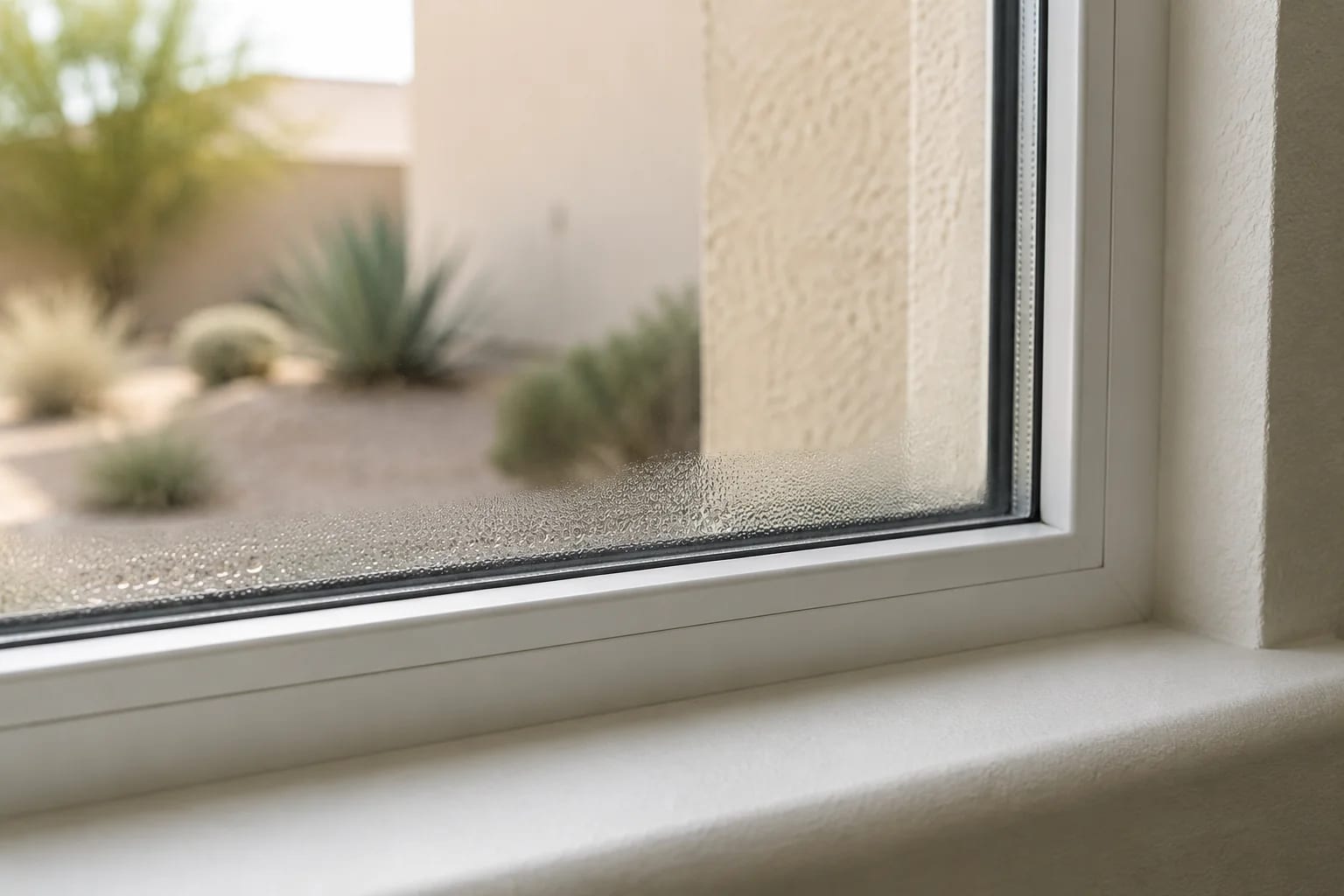
A closed window can feel hot in direct sun without admitting outside air. Glass configuration, frame material, exterior shading, orientation, and nearby hardscape all affect surface temperature. Likewise, cooler glass can chill indoor air and make it descend, which may feel like a draft even when seals are intact.
If the concern is strongest only on a particular exposure, record that orientation and the hours of direct sun. A window discussion can then cover glass ratings, frame condition, shading, and air sealing as separate issues instead of treating every comfort complaint as the same failure.
Match the response to the failed component
Cleaning and reseating a removable seal may address a minor maintenance condition. Worn hardware, an out-of-adjustment sash, or a failed weather seal may be repairable when compatible parts and a sound frame are available. Recurring perimeter leakage, distortion, deteriorated material, or several failing components may justify comparing replacement scope.
Ask an evaluator to show where air is moving, identify whether the path is within the unit or around the installation, and explain which work is included. If wall or water damage is suspected, the scope should address that condition rather than hiding it behind new trim or sealant.
Prepare useful notes for a window evaluation
A short record is more helpful than trying to reproduce the problem during an appointment. Photograph visible gaps, note whether wind direction matters, and list any openings that are difficult to operate or show between-pane haze. Clear safe access without removing attached alarms or security devices unless instructed.
Which seam or corner feels different from the surrounding area?
Does the condition change when the HVAC system starts?
Is the sash fully closed, latched, and evenly seated?
Are seals damaged or simply dusty and out of position?
Is direct sun, water staining, or difficult operation part of the concern?
Use the inspection to make a scoped decision
An air leak does not mean every window needs replacement, and new caulk is not a universal answer. The useful outcome is a defined path, a condition-based remedy, and a written scope that explains the window, perimeter, finishes, and any concealed conditions.
Renmark can evaluate window openings for Arizona homeowners and discuss repair-versus-replacement considerations. Describe when the airflow occurs in your estimate request so the appointment can focus on the conditions that matter.
Questions related to this guide
Can weather stripping solve every draft around an exterior door?
Weather stripping can correct some seal gaps, but it cannot solve every cause. A warped slab, loose hinges, damaged threshold, out-of-square frame, deteriorated surrounding material, or installation movement may require adjustment, repair, or replacement. Identifying where air or water enters is the useful first step.
Can individual windows be replaced?
Often, yes. Whether replacing one opening is practical depends on its condition, compatibility with nearby windows, the desired appearance, and the cause of the problem. Evaluating the affected opening and the surrounding wall helps determine whether a focused replacement or a larger plan makes more sense.
What are common signs windows may need replacement?
Possible signs include difficult operation, damaged frames, recurring water entry, drafts caused by a poor seal, persistent condensation between panes, or glass and hardware that no longer perform as intended. One symptom does not automatically mean every window needs replacement; an on-site evaluation can separate repairable issues from broader deterioration.

Continue your research
WindowsRenmark helps Arizona homeowners upgrade old, inefficient, or damaged windows with professionally installed replacement windows designed for comfort, curb appeal, and long-term performance.Phoenix service areaRenmark serves Phoenix homeowners as part of its greater Phoenix and surrounding-community service area. Residential attic-insulation evaluations are available by phone so Renmark can confirm the address, attic access, and requested scope.Tempe service areaRenmark is based in Tempe and serves homeowners throughout the greater Phoenix area and surrounding communities. Residential attic-insulation evaluations are available by phone so Renmark can confirm the address, attic access, and requested scope.
Ready to Discuss Your Home?
Tell Renmark what you would like evaluated, and our team will help you understand the condition of your home, available options, and appropriate next steps.