
Resource
What Window Condensation Can Mean in an Arizona Home
Understand the difference between room-side, exterior, and between-pane window condensation—and which observations help identify the next step.
Renmark Editorial Team · 4 min read · Published Jul 18, 2026 · Reviewed Jul 18, 2026
Condensation is water vapor becoming liquid on a surface cool enough for the surrounding air. The location of that moisture matters. Droplets on the room-side glass, moisture on the exterior face, and haze trapped between panes come from different conditions and should not be treated as one problem.
Even in Arizona’s dry climate, cooking, bathing, indoor plants, humidifiers, monsoon moisture, and overnight temperature changes can create temporary condensation. The goal is to identify which surface is wet, how often it occurs, and whether the frame or surrounding finishes are also affected.
First determine which surface is wet
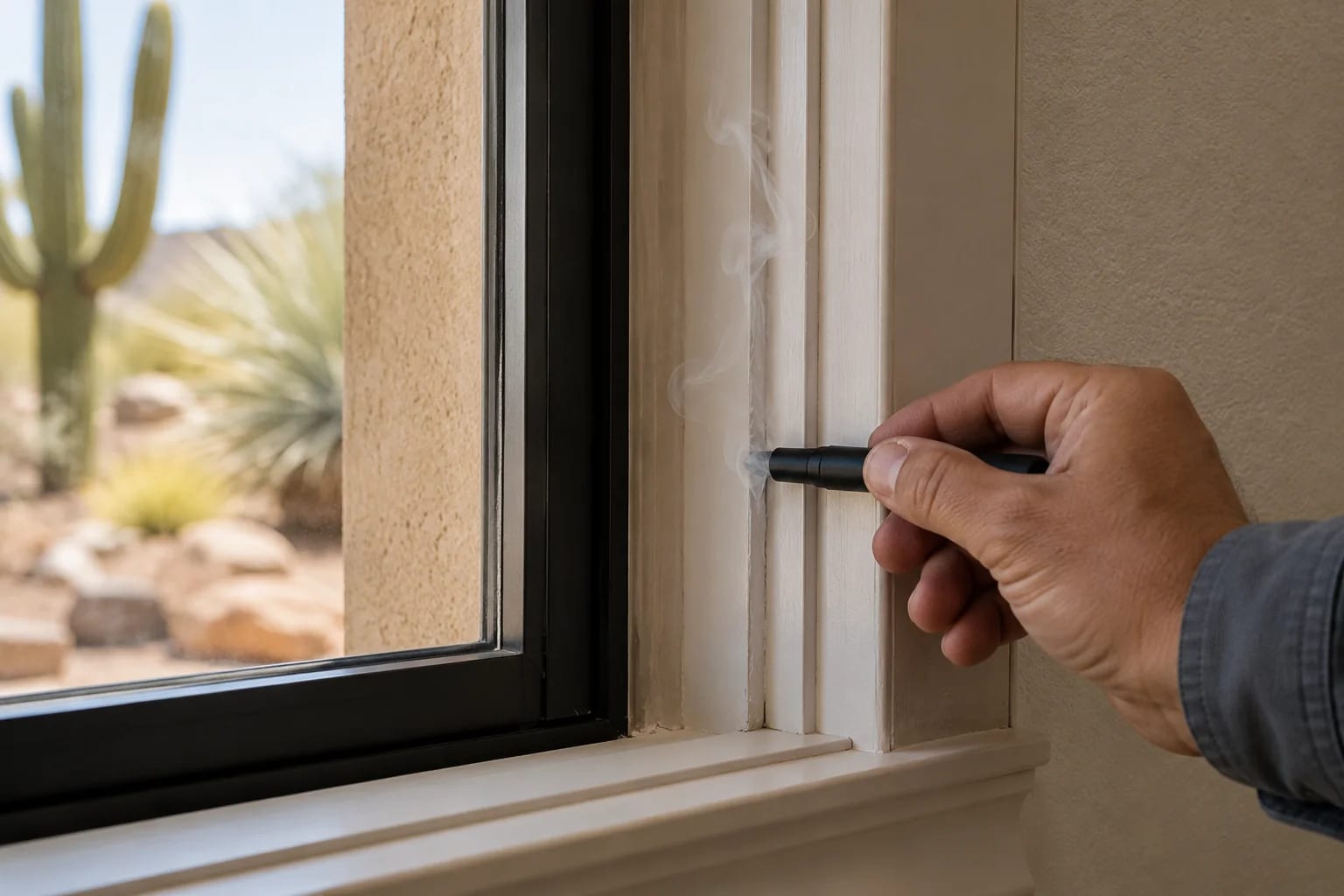
Without opening or disassembling anything, gently check whether the moisture wipes from the accessible room-side surface. Exterior condensation will remain on the outdoor face. Moisture or milky haze that cannot be reached from either side may be within a sealed insulating-glass unit.
Observe more than one window. A short-lived band along several lower edges on a cool morning suggests a different condition than one cloudy pane that remains hazy all day. Photograph the pattern before wiping accessible glass so an evaluator can see its extent.
Room-side condensation reflects glass temperature and indoor moisture
Warm indoor air can hold moisture that condenses when it meets cooler glass. Closed blinds, limited airflow, a nearby bathroom, or unusually high indoor humidity can make one window show moisture before others. During a humid monsoon period, the pattern may differ from the rest of the year.
Wipe standing water so it does not remain on wood, drywall, or finishes. Use kitchen and bathroom exhaust equipment as intended, avoid directing a humidifier at glass, and keep interior airflow paths reasonably open. Persistent moisture may warrant review of indoor humidity and ventilation as well as the window.
Exterior condensation is not the same as a failed seal
Under certain clear, humid, or rapidly changing conditions, an outdoor glass surface can cool enough for exterior moisture to form. It often disappears as the air or glass warms. Its presence alone does not mean outside water has entered the insulated glass unit.
Before drawing a conclusion, note whether the moisture is truly outside and whether nearby shading changes the pattern. Do not drill holes or disturb the glazing system in an attempt to release condensation.
Between-pane haze can indicate an insulating-glass problem
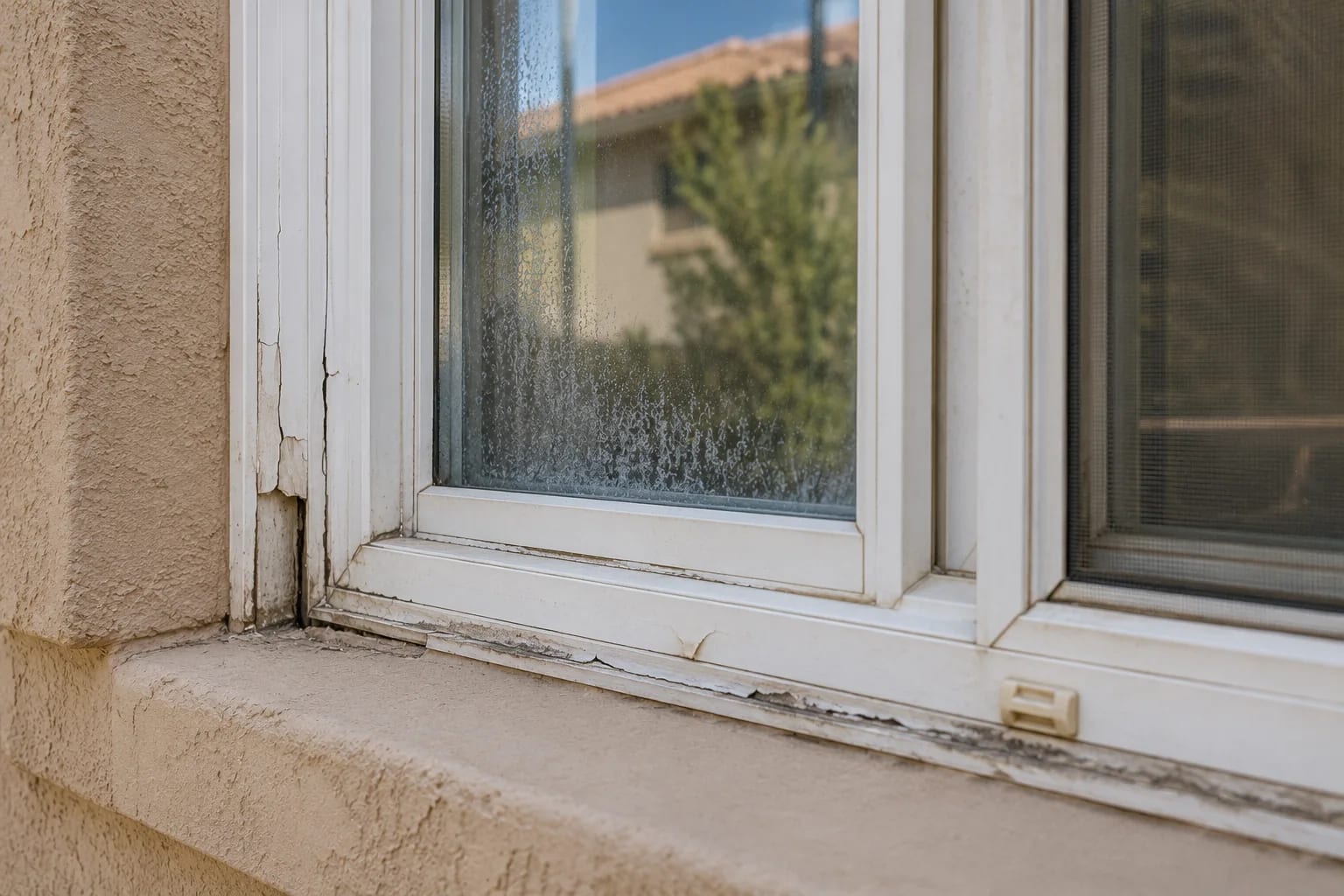
Insulated glass typically uses a sealed space between panes. Recurring fog, droplets, or deposits inside that inaccessible space may indicate the edge seal no longer controls moisture as intended. Cleaning either exposed face will not remove a condition sealed between the panes.
The appropriate scope depends on the window design, availability of a compatible glass unit, sash and frame condition, remaining product coverage, and broader project goals. A failed glass unit does not automatically require replacing every window in the home.
Pay attention to water beyond the glass
Soft trim, peeling finishes, staining below the sill, or water that appears during rain may point to more than surface condensation. The source could involve the window perimeter, flashing, wall, roof drainage, or another exterior joint. Record whether damage follows indoor humidity, overnight cooling, wind-driven rain, or irrigation.
Recurring water at surrounding materials deserves timely evaluation. Avoid sealing visible openings indiscriminately, because some exterior gaps are designed to drain and a concealed water path may begin above the stain.
Bring a clear observation record to the evaluation
Useful details include the affected rooms, time of day, weather, indoor activities, which surface is wet, and how long the condition lasts. Include product labels or warranty information if available, but do not delay an evaluation because records are incomplete.
Can the moisture be reached from indoors or outdoors?
Does it clear after sunrise or remain throughout the day?
Is the condition limited to one pane or repeated across a room?
Are frames, sills, drywall, or flooring also wet or stained?
Did the pattern begin after a storm, occupancy change, or equipment change?
Choose a remedy only after identifying the moisture location
Interior humidity management, a glass-unit repair, window replacement, and correction of a wall or drainage issue solve different problems. A useful recommendation explains which surface and component are involved and why the proposed work addresses the evidence.
If condensation, haze, or related damage is recurring at windows in your Arizona home, Renmark can inspect the openings and discuss an appropriate window scope without assuming that one symptom dictates a whole-home project.
Questions related to this guide
What is Low-E glass?
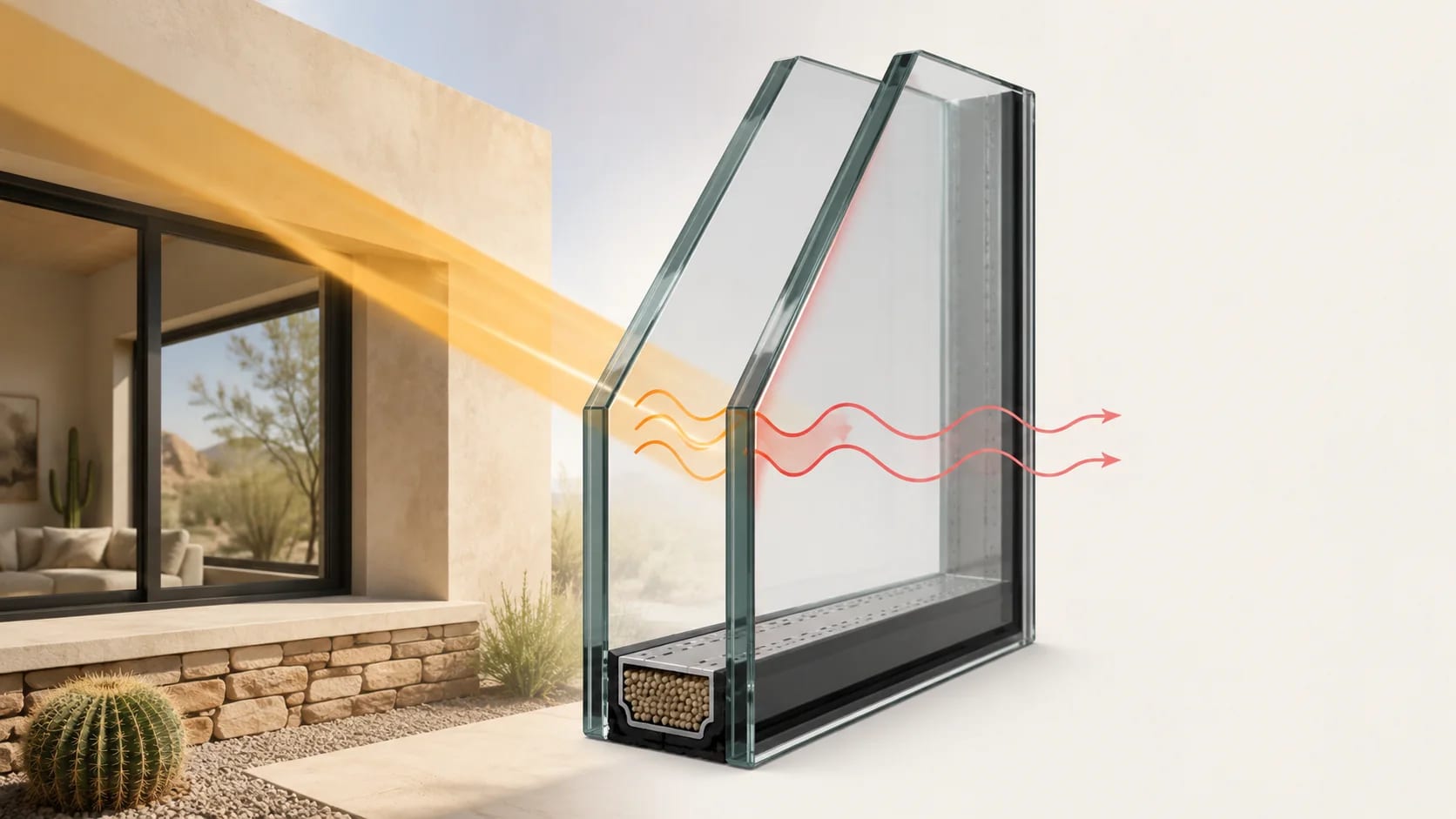
Low-emissivity, or Low-E, glass uses a thin coating designed to manage radiant heat transfer while still admitting visible light. Coating type, pane configuration, orientation, shading, and the complete window assembly all matter, so compare rated products and ask how the proposed glass package fits each side of your home.
Can individual windows be replaced?
Often, yes. Whether replacing one opening is practical depends on its condition, compatibility with nearby windows, the desired appearance, and the cause of the problem. Evaluating the affected opening and the surrounding wall helps determine whether a focused replacement or a larger plan makes more sense.
What are common signs windows may need replacement?
Possible signs include difficult operation, damaged frames, recurring water entry, drafts caused by a poor seal, persistent condensation between panes, or glass and hardware that no longer perform as intended. One symptom does not automatically mean every window needs replacement; an on-site evaluation can separate repairable issues from broader deterioration.
Continue your research
WindowsRenmark helps Arizona homeowners upgrade old, inefficient, or damaged windows with professionally installed replacement windows designed for comfort, curb appeal, and long-term performance.Phoenix service areaRenmark serves Phoenix homeowners as part of its greater Phoenix and surrounding-community service area. Residential attic-insulation evaluations are available by phone so Renmark can confirm the address, attic access, and requested scope.Tempe service areaRenmark is based in Tempe and serves homeowners throughout the greater Phoenix area and surrounding communities. Residential attic-insulation evaluations are available by phone so Renmark can confirm the address, attic access, and requested scope.
Ready to Discuss Your Home?
Tell Renmark what you would like evaluated, and our team will help you understand the condition of your home, available options, and appropriate next steps.