
Resource
How Monsoon Wind Can Affect an Arizona Roof
Learn which roof details are exposed to monsoon outflow winds, what can be checked safely from the ground, and when post-storm changes deserve inspection.
Renmark Editorial Team · 4 min read · Published Jul 18, 2026 · Reviewed Jul 18, 2026
Arizona monsoon storms can bring abrupt outflow winds before rain reaches a property. Those winds act on roof edges, ridges, flashing, vents, and any material that was already loose or poorly attached. A roof may look intact from the street while still having a localized condition that deserves review.
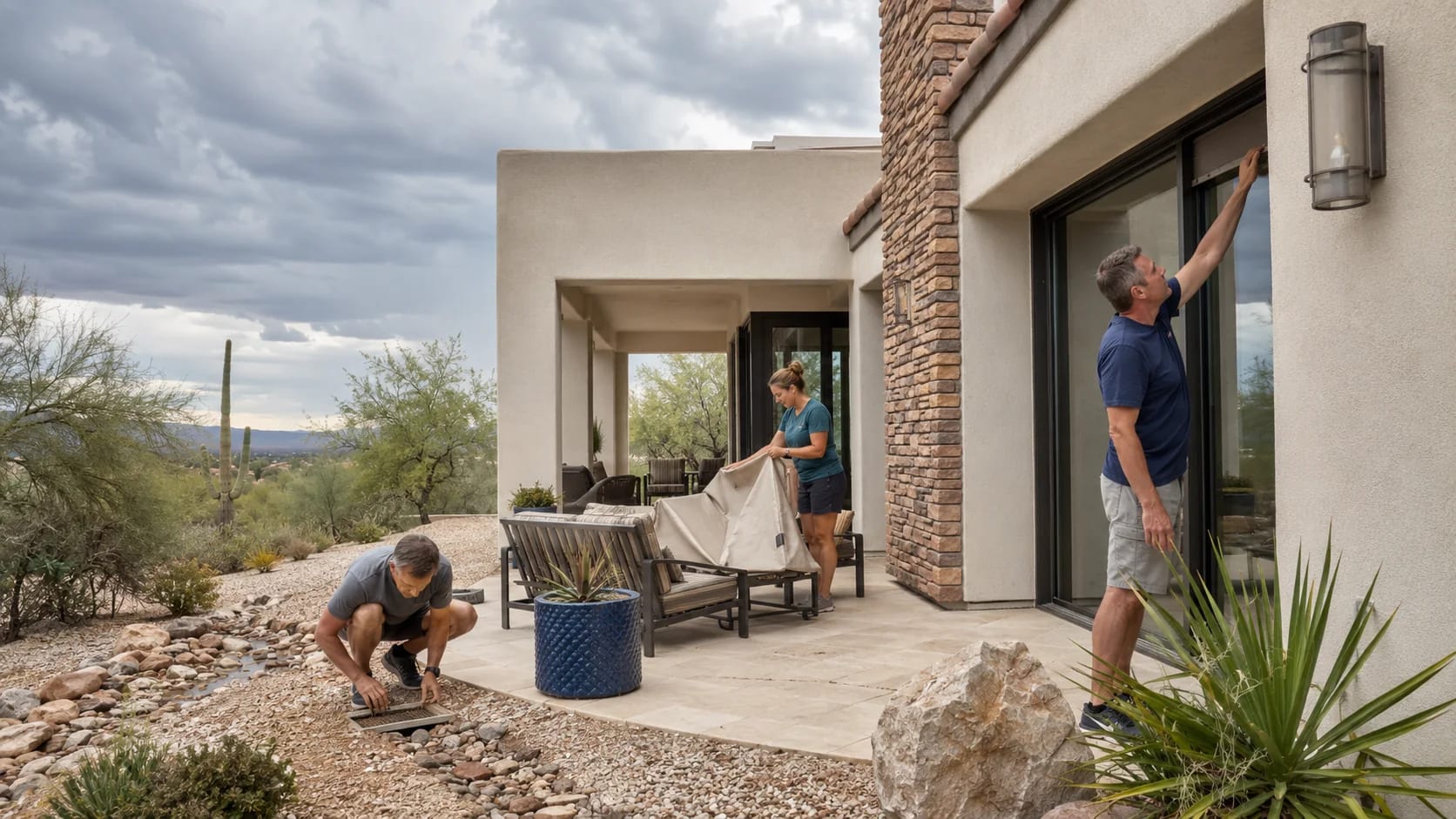
Homeowners should not climb onto a roof after a storm. The safer approach is to notice changes from the ground and indoors, document what can be seen, and request an inspection when symptoms or nearby damage suggest the roof was affected.
Wind pressure is not uniform across a roof
Roof shape, slope, height, edges, overhangs, nearby buildings, and the direction of an outflow all change how wind moves around a home. Edges and transitions can experience different forces than the middle of a broad roof plane. That is why one displaced piece does not describe the condition of the entire assembly.
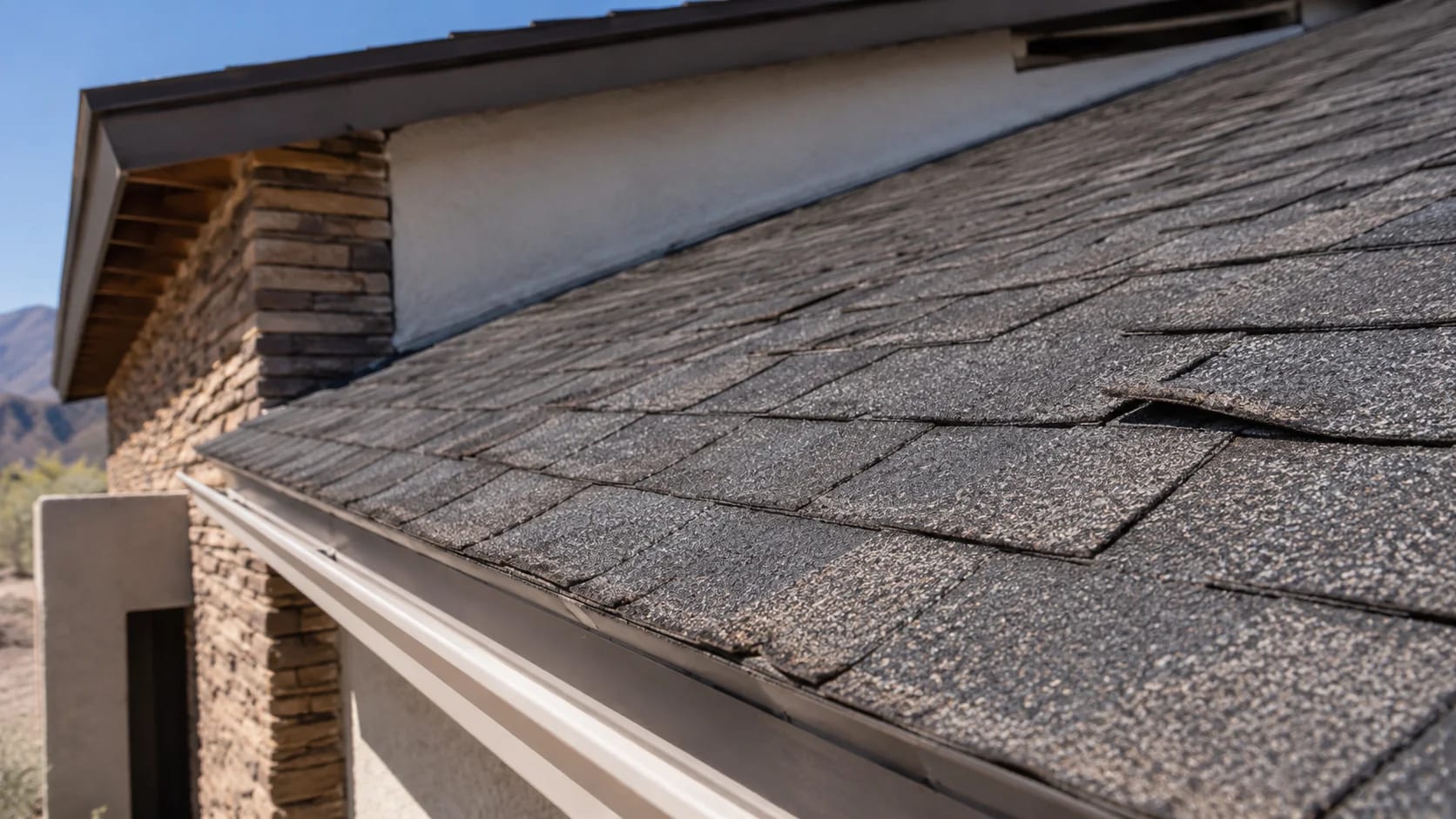
Different systems also show change differently. Asphalt shingles may lift, crease, or go missing; tile may shift or break; low-slope systems may show edge, flashing, or membrane concerns. An inspection should follow the installed system rather than applying one checklist to every roof.
Existing weaknesses can become visible during a storm
Aged sealant, loose edge metal, deteriorated fastener locations, damaged underlayment, or a prior repair may be more vulnerable when wind arrives. Debris can also strike roof coverings, vents, skylights, and drainage components. The storm may reveal a condition without making its history obvious from one photograph.
Avoid assigning cause based only on timing. Record that a symptom was noticed after the event, then let the inspection distinguish fresh displacement, longer-term wear, maintenance conditions, and areas that cannot be dated reliably.
Make a safe ground-level check after conditions settle
Wait until wind, lightning, and active rain have passed. From normal walking surfaces, look for material in the yard, changed rooflines, lifted edge pieces, damaged vents, branches resting on the roof, or gutters and downspouts that have pulled loose. Use binoculars or a camera zoom rather than a ladder.
Inside, check known vulnerable areas and ceilings beneath the roof for new stains, dampness, or odors. Do not enter an attic with difficult access, extreme heat, suspected structural movement, wet electrical components, or other unsafe conditions.
Some changes call for prompt professional attention
Active water entry, a sagging ceiling, substantial missing material, a branch impact, visible structural movement, or roof components threatening to fall should be treated as urgent conditions. Keep people away from the affected area and contact the appropriate qualified help.
A small piece of debris may not be urgent, but it can justify a scheduled inspection when its source is unclear. Also request review when repeated storms produce the same interior symptom or when a vulnerable repair area has changed.
Document before temporary work when it is safe
Photograph the broad area and the visible detail from safe locations. Note the storm date, when the change was first observed, and whether water followed. If temporary protection is needed, ask the provider to document conditions before and after the work where practical.
Temporary measures should not create new hazards or conceal the issue without a follow-up plan. Never attempt to place a tarp while a roof is wet, wind-exposed, or unsafe to access.
Ask a post-storm inspection to explain the roof system
A useful inspection identifies roof areas, covering condition, edges, penetrations, flashing, drainage, visible deck or attic indicators where included, and the difference between focused work and broader deterioration. The written scope should state known exclusions and how concealed conditions would be handled.
Which observations appear storm-related, age-related, or indeterminate?
Are displaced materials isolated or repeated across roof areas?
Can compatible repair materials and details be used?
Does water entry point to a roof detail or another exterior source?
What temporary and permanent work is included in writing?
Use storm observations to plan, not to guess
Monsoon wind does not mean a roof automatically needs replacement, and an intact street view does not prove every detail is sound. A safe observation record and system-specific inspection provide the basis for a proportionate repair or replacement discussion.
Renmark can evaluate residential roofs across Arizona after monsoon conditions. Include the storm date and visible symptoms in your estimate request, and avoid roof access while waiting for the appointment.
Questions related to this guide
How are weather delays handled during roofing work?
Weather planning should address when work will pause, how exposed areas will be protected, and how schedule changes will be communicated. Wind, rain, lightning, and excessive heat can affect safe installation. Ask for the project-specific weather plan because roof type and stage of work change the precautions needed.
When is roof repair more appropriate than replacement?
A focused repair may be appropriate when damage is limited, compatible materials are available, and the surrounding roof system remains serviceable. Replacement may deserve consideration when problems are widespread, the roof assembly is broadly deteriorated, or repeated repairs no longer address the underlying issue. An on-site evaluation is needed to compare the options.
What are signs a roof should be inspected?
Reasons to request an inspection include active or suspected leaks, displaced or broken materials, visible flashing damage, unusual debris after wind, sagging areas, recurring ceiling stains, or a roof nearing the expected service range for its system. These signs call for evaluation, not an automatic assumption that full replacement is required.

Continue your research
RoofingRenmark helps Arizona homeowners navigate roof replacement with clear project coordination, product guidance, installation scheduling, and warranty support.Phoenix service areaRenmark serves Phoenix homeowners as part of its greater Phoenix and surrounding-community service area. Residential attic-insulation evaluations are available by phone so Renmark can confirm the address, attic access, and requested scope.Tempe service areaRenmark is based in Tempe and serves homeowners throughout the greater Phoenix area and surrounding communities. Residential attic-insulation evaluations are available by phone so Renmark can confirm the address, attic access, and requested scope.Roof Replacement in PhoenixA Phoenix roof evaluation should consider visible materials together with underlayment, flashing, penetrations, drainage, ventilation, and prior repairs. After monsoon weather, homeowners can document changes from the ground and request a professional inspection rather than climbing onto the roof.
Ready to Discuss Your Home?
Tell Renmark what you would like evaluated, and our team will help you understand the condition of your home, available options, and appropriate next steps.