
Resource
Common Signs of Roof Wear in the Phoenix Area
Learn which visible and interior roof symptoms deserve evaluation and how Phoenix sun, heat, wind, dust, and monsoon weather affect inspection priorities.
Renmark Editorial Team · 4 min read · Published Jul 15, 2026 · Reviewed Jul 15, 2026
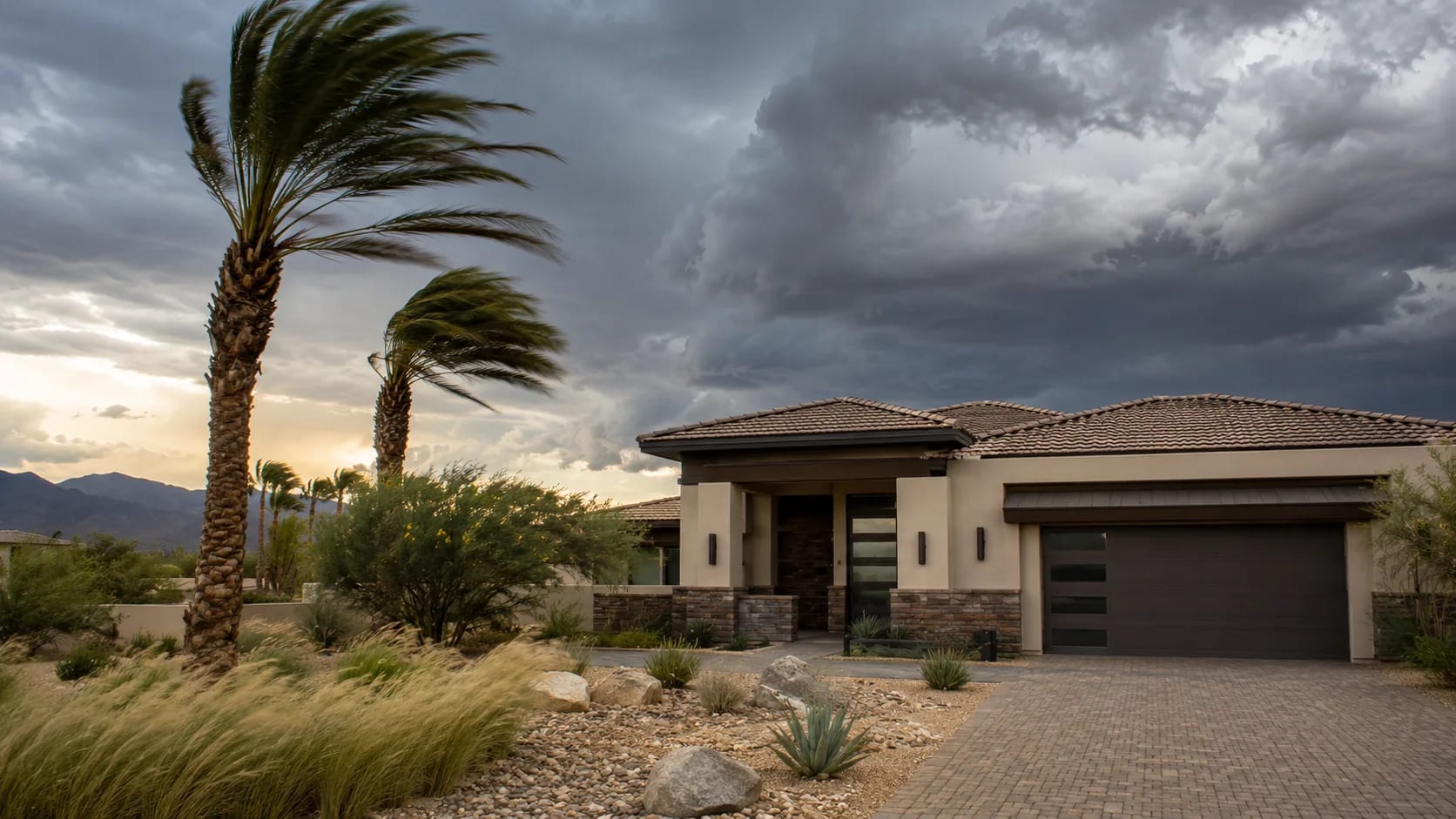
Phoenix-area roofs experience strong sun, high surface temperatures, dust, wind, and seasonal storms. Those conditions can expose weaknesses, but a weather event or an older-looking surface does not by itself prove that a roof needs replacement.
Safe observation and a documented inspection are more useful than walking the roof yourself. Roofing materials can be fragile or slippery, and damage is not always visible from the ground. Use the signs below to decide when to request evaluation and what information to record.
Interior stains, dampness, or unexplained odor
Ceiling or wall discoloration, damp insulation, peeling finish, or a recurring musty odor after rain can indicate water entry. Plumbing, condensation, and wall openings can create similar symptoms, so note timing and location rather than declaring the roof the cause.
If active water is near electrical fixtures or creates a safety concern, protect people and property and contact an appropriate professional. Photograph the condition before it dries, but do not enter an unsafe attic or disturb materials you are not equipped to handle.
Displaced, cracked, or missing exposed materials
From the ground, you may notice a shifted tile, missing shingle, lifted edge, unusual gap, or material in the yard after wind. These observations justify a closer look because exposed underlayers and edges can be vulnerable.
Do not climb onto the roof to reposition material. Walking can break tiles, damage hot shingles, or create a fall risk. A roofer can determine whether the issue is isolated and inspect the surrounding attachment and underlayment where accessible.
Changes around flashing and penetrations
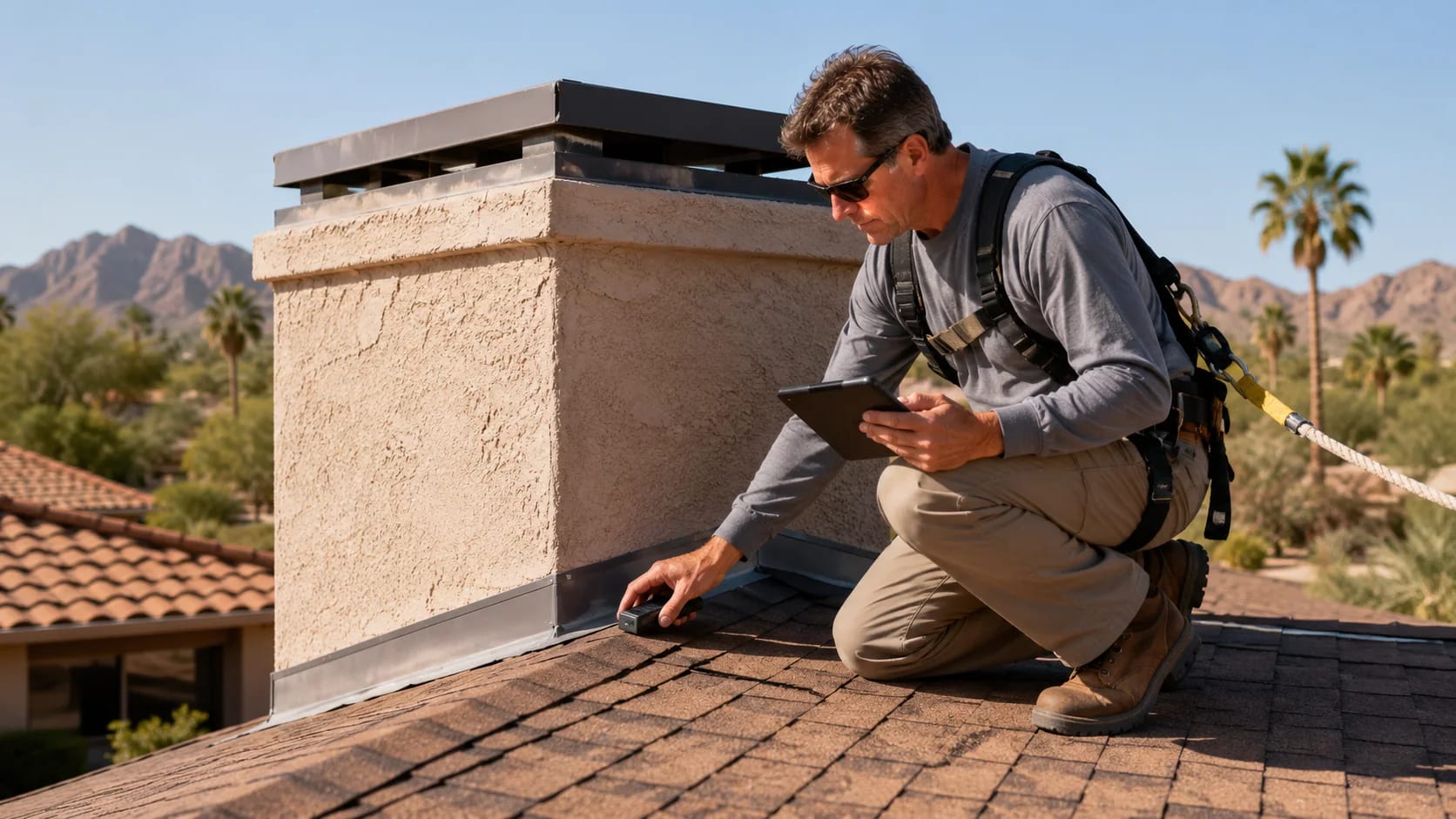
Roof-to-wall transitions, vents, pipes, skylights, chimneys, valleys, and equipment supports require details that direct water around openings. Visible separation, displaced metal, cracked sealant, corrosion, or a repeated patch can be reasons for evaluation.
Surface sealant is not a universal flashing system. Ask how the layers beneath and around a penetration are configured and whether the proposed correction integrates with them.
Shingle surface and edge changes
Shingles can show cracking, curling, exposed areas, edge damage, or loss of surface granules. Some loose granules are expected with handling and weathering, while concentrated bare areas or material accumulating with other symptoms deserves review.
Appearance should be interpreted in context: slope, orientation, ventilation, foot traffic, repairs, and installation all matter. Avoid using a single close-up photograph as a whole-roof conclusion.
Tile movement and underlayment questions
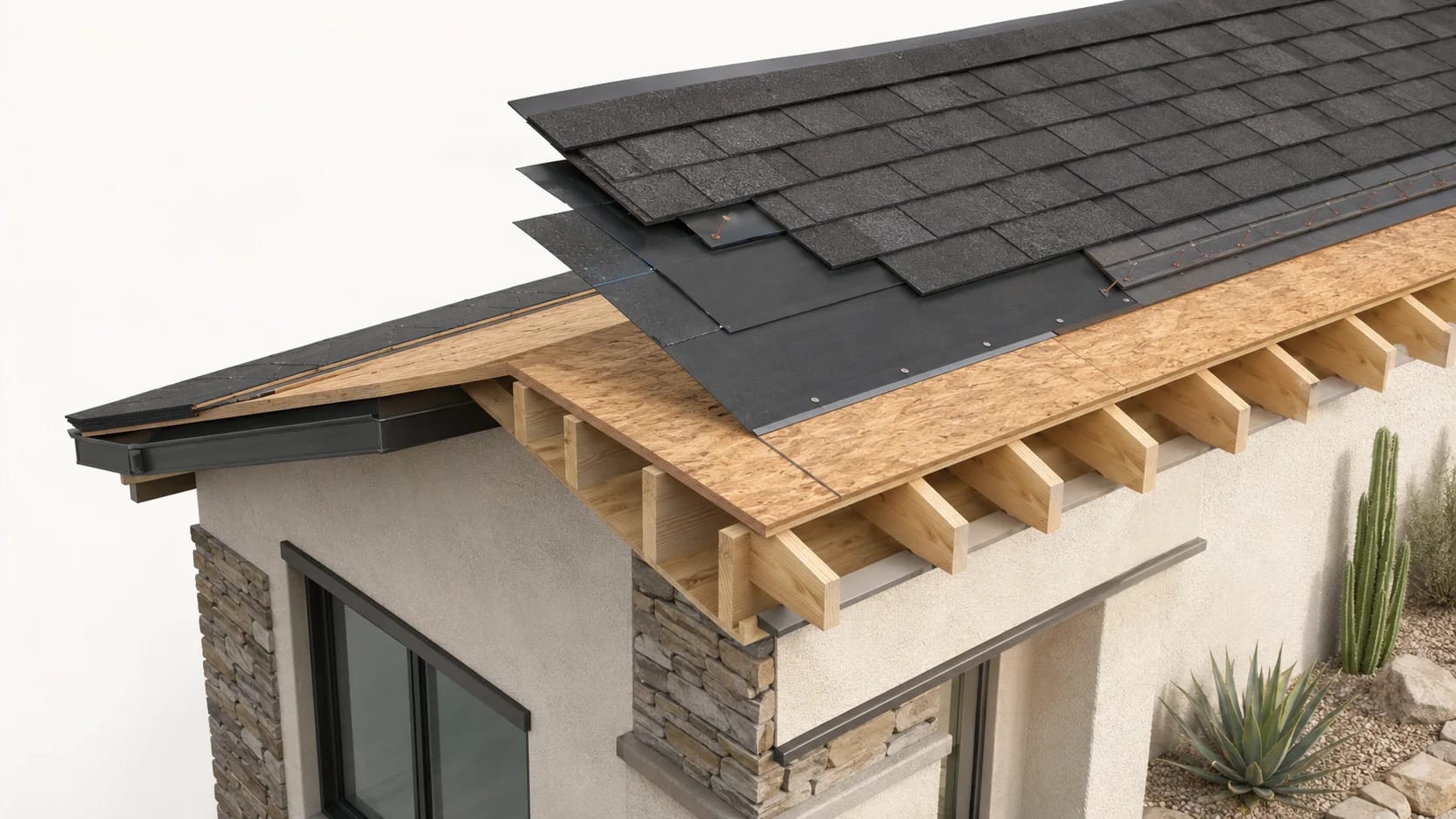
Concrete or clay tile is the visible covering, but the underlayment and flashing beneath it are important parts of water management. A broken or displaced tile may be an isolated issue, yet recurring movement or water entry can justify review of the underlying assembly.
Ask whether an inspection can observe representative underlayment without causing damage and how any lifted tiles will be reset. Tile condition alone does not describe the remaining condition of concealed layers.
Drainage, debris, and roof-edge concerns
Leaves, dust, or other debris can collect at valleys, scuppers, drains, and roof-to-wall areas. Blockage may redirect water or hold it where the system was not designed to. From a safe location, look for overflow marks, unusual staining, or debris accumulation after storms.
Drainage maintenance depends on roof type and access. Have a qualified person handle conditions that require roof access. Also observe whether landscape or roof runoff is affecting walls and openings below; not every stain begins at the roof covering.
Post-storm documentation checklist
After wind or rain, make observations without creating a new hazard. Keep records for the contractor and, if relevant, your insurer, but avoid making coverage assumptions.
Photograph visible debris or displaced material from the ground.
Note storm direction, approximate timing, and where water appeared.
Check accessible ceilings and walls without entering unsafe spaces.
Record prior repair locations and recurring symptoms.
Keep removed material only when it can be collected safely.
Request a written condition report and proposed scope.
An inspection should distinguish observation from recommendation
A roof can show wear and remain repairable, or look acceptable from the street while concealed details need attention. A useful evaluation documents what was observed, which areas were accessible, what remains uncertain, and why repair, maintenance, or replacement is being discussed.
Renmark can evaluate roofing replacement projects across Arizona. Describe the symptoms and recent weather when requesting an estimate so the representative can plan the appropriate on-site review.
Questions related to this guide
How are weather delays handled during roofing work?
Weather planning should address when work will pause, how exposed areas will be protected, and how schedule changes will be communicated. Wind, rain, lightning, and excessive heat can affect safe installation. Ask for the project-specific weather plan because roof type and stage of work change the precautions needed.
Can roofing work be completed during Arizona heat?
Roofing schedules in hot weather depend on material requirements, roof conditions, crew safety practices, and daily temperatures. Work may start earlier, pause, or be rescheduled when conditions are unsafe or could compromise installation. The project team should explain how it plans the work and protects an exposed roof between stages.
What are signs a roof should be inspected?
Reasons to request an inspection include active or suspected leaks, displaced or broken materials, visible flashing damage, unusual debris after wind, sagging areas, recurring ceiling stains, or a roof nearing the expected service range for its system. These signs call for evaluation, not an automatic assumption that full replacement is required.

Continue your research
RoofingRenmark helps Arizona homeowners navigate roof replacement with clear project coordination, product guidance, installation scheduling, and warranty support.Phoenix service areaRenmark serves Phoenix homeowners as part of its greater Phoenix and surrounding-community service area. Residential attic-insulation evaluations are available by phone so Renmark can confirm the address, attic access, and requested scope.Roof Replacement in PhoenixA Phoenix roof evaluation should consider visible materials together with underlayment, flashing, penetrations, drainage, ventilation, and prior repairs. After monsoon weather, homeowners can document changes from the ground and request a professional inspection rather than climbing onto the roof.
Ready to Discuss Your Home?
Tell Renmark what you would like evaluated, and our team will help you understand the condition of your home, available options, and appropriate next steps.