
Resource
Roof Repair vs. Roof Replacement: Questions to Consider
Compare repair and replacement by looking at the extent and cause of damage, roof-system condition, material compatibility, recurrence, and written scope.
Renmark Editorial Team · 4 min read · Published Jul 15, 2026 · Reviewed Jul 15, 2026
A roof leak does not automatically mean the entire roof needs replacement, and a patch is not automatically the lower-risk choice. The useful question is whether a defined repair can correct the cause while the surrounding system remains serviceable.
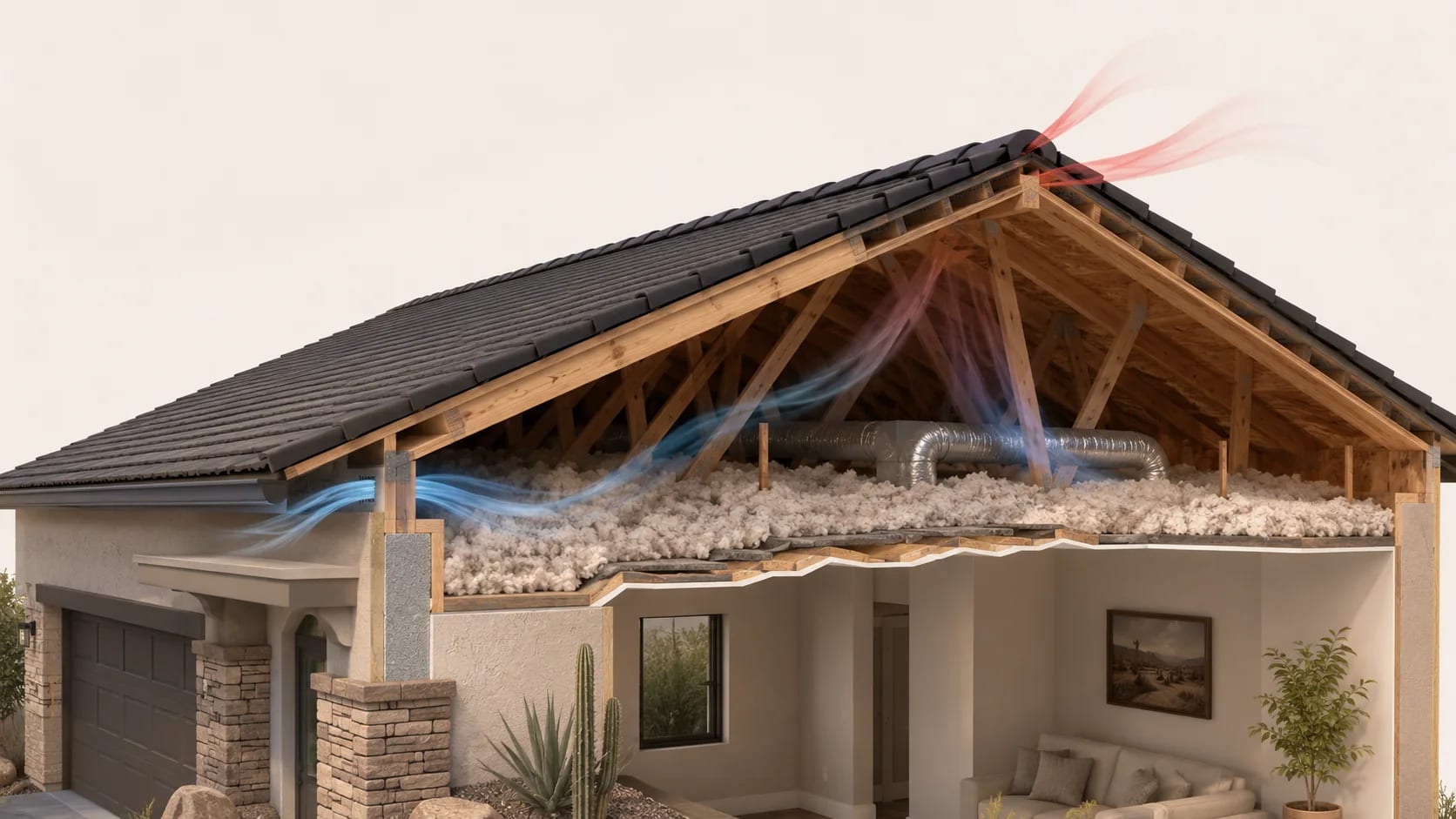
Roof coverings, underlayment, flashing, penetrations, deck, drainage, and ventilation work together. An on-site evaluation should identify the observed condition and explain how the proposed scope connects to that system.
Locate the cause, not only the interior stain
Water can travel along decking, framing, fasteners, or other materials before it becomes visible indoors. The ceiling stain may not sit directly below the entry point. Wind direction, roof slope, transitions, penetrations, flashing, drainage, and prior repairs can all influence the path.
Document when the symptom appears and whether it follows wind-driven rain, prolonged rain, or another event. An evaluator may need roof-surface and attic or interior observations. A proposal that addresses only the stain without explaining a probable entry path is incomplete.
When a focused repair may be appropriate
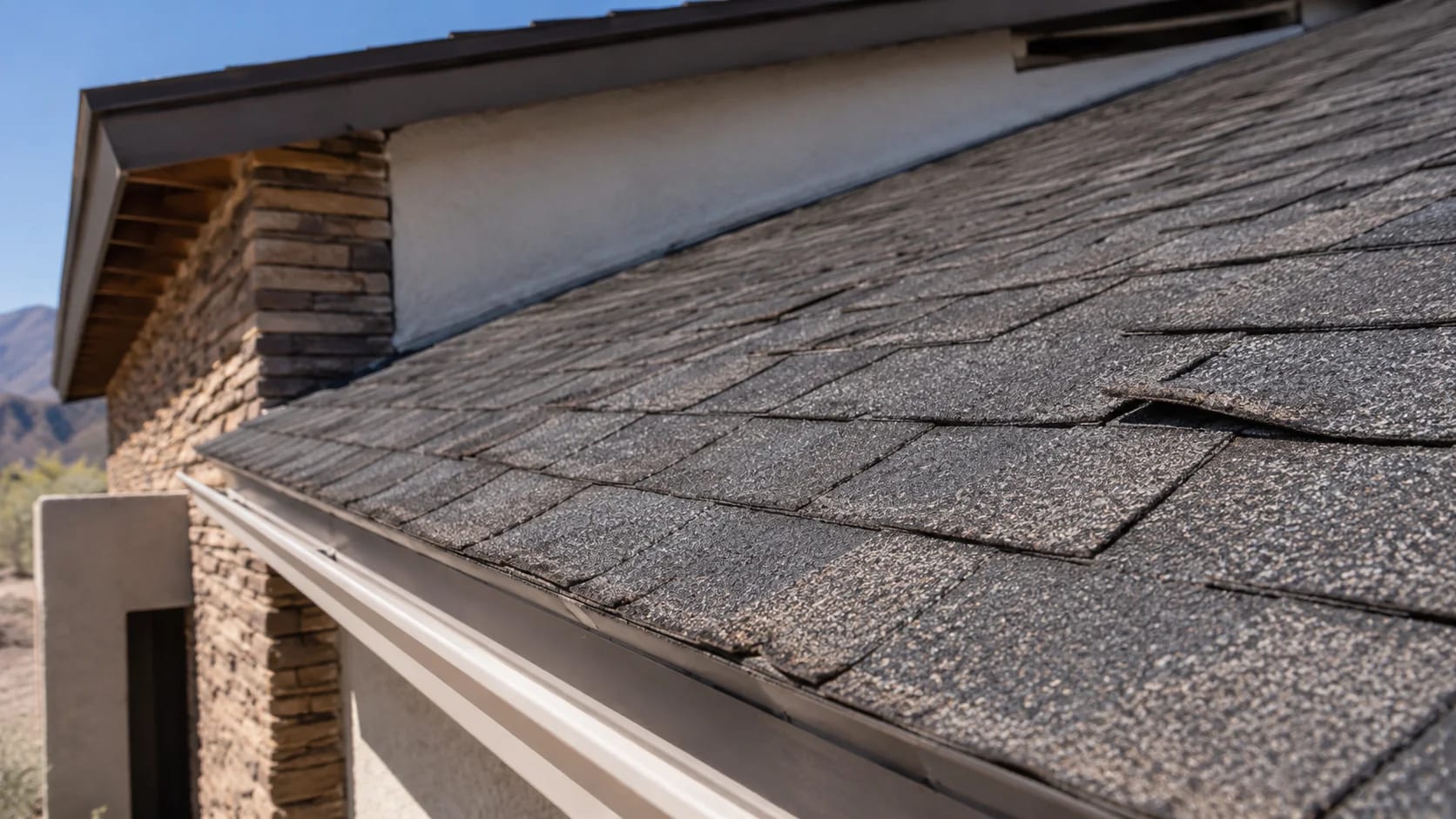
Repair may be reasonable when the condition is limited, compatible materials can be integrated, and adjacent roofing, underlayment, flashing, and deck remain serviceable. Examples can include a defined flashing or penetration detail, isolated material damage, or another local condition confirmed during inspection.
Ask how far the repair extends, which layers are opened, how new materials tie into existing materials, and what evidence supports the boundary. A repair warranty should be read in light of the surrounding roof that remains unchanged.
When replacement deserves consideration
Replacement may be considered when deterioration is widespread, leaks have multiple causes, underlayment or flashings are broadly compromised, materials cannot be matched or integrated reliably, or repeated repairs have not corrected the underlying condition. A desired change in roof system can also make replacement part of a planned improvement.
Full replacement should still have a detailed scope. Tear-off, deck evaluation, repair allowances, underlayment, covering, flashing, penetrations, ventilation, edge details, disposal, and site protection need definition. “New roof” is not enough information to compare proposals.
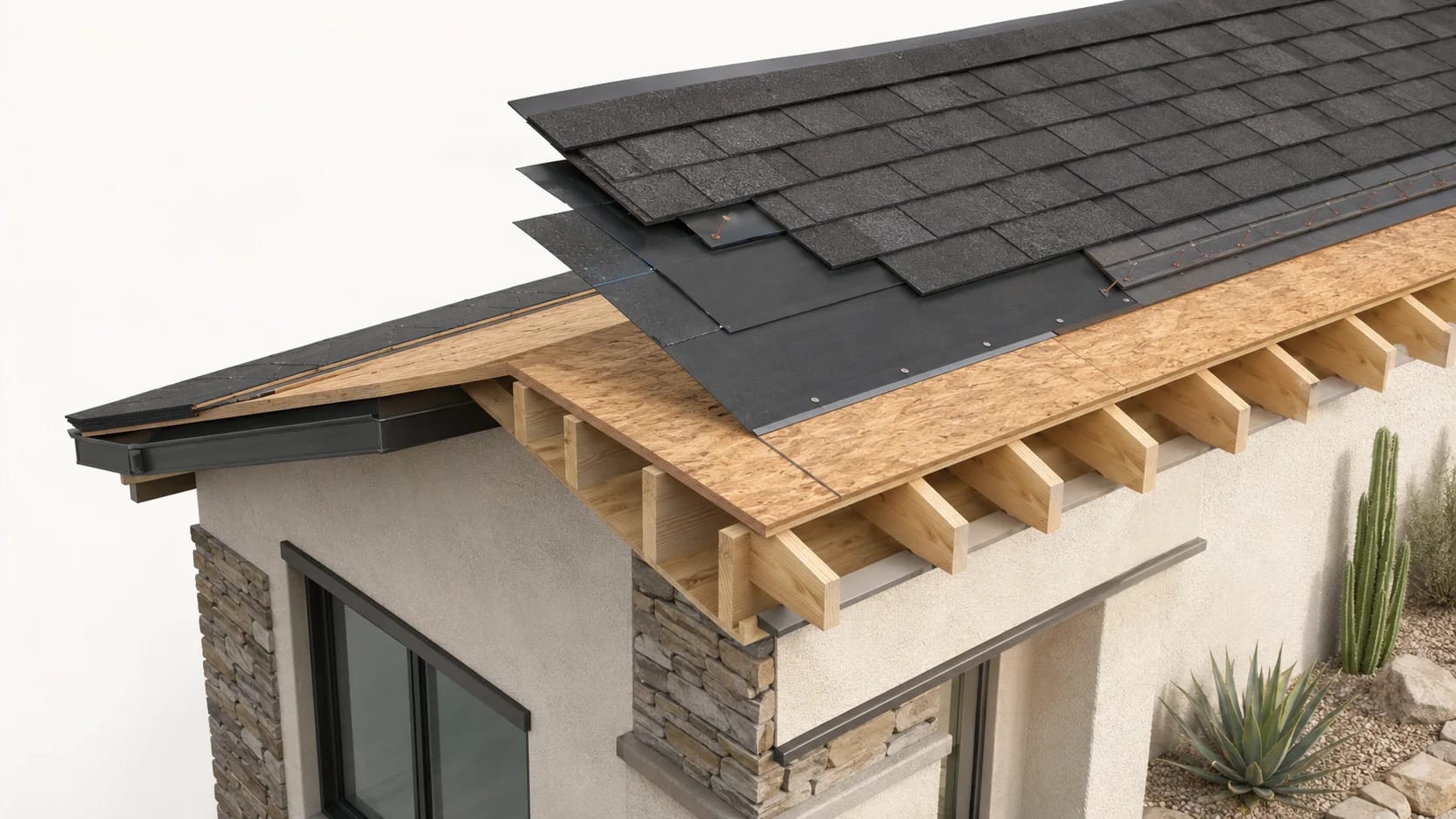
Consider the roof as layers and transitions
Visible shingles or tiles are only the exposed layer. Underlayment provides part of the water-management assembly, while flashings handle changes in plane, edges, walls, chimneys, and penetrations. The deck supports the system, and drainage must move water away without blocked paths.
Ask which existing materials will remain. Tile roofs, for example, can involve decisions about reusable versus replacement tile and the underlayment beneath it. The answer must come from the actual system and condition, not a general rule applied to every roof.
Review recurrence and prior work
A repair history can reveal whether the same location repeatedly fails, several unrelated items have occurred, or prior work was temporary. Gather invoices or photographs when available and point out interior areas that have been patched or painted.
Repeated repair does not prove replacement is required, but it should prompt a broader condition review. Conversely, one isolated event does not prove the whole roof has reached the end of service. Ask the contractor to separate observed facts from predictions.
Compare uncertainty and change-order handling
Roof conditions can be concealed until materials are lifted or removed. A useful proposal explains known assumptions, unit prices or allowances where appropriate, documentation of deck or substrate damage, and who can approve added work.
Do not leave this process until the roof is open. Ask how photographs and written change orders are provided and how an unexpected condition affects weather protection and schedule.
Ask the same questions for both scopes
Clear questions make repair and replacement recommendations easier to compare.
What observed condition is the proposed work intended to correct?
Which roof layers and transitions are included?
What remains in place, and what is its observed condition?
How will new and existing materials be integrated?
How are concealed conditions documented and approved?
What site protection, weather protection, cleanup, and warranty documents apply?
Make the decision after an on-site evaluation
The right scope balances observed condition, compatibility, recurrence, project goals, and the limitations of what remains. It should not be based solely on roof age, a single photograph, or an alarmist prediction.
Renmark can evaluate roofing replacement needs for Arizona homes and explain the proposed system in writing. If a focused repair is the category you need, a condition-based review should still help you understand the boundary and next step.
Questions related to this guide
What if hidden damage is found during installation?
Some conditions cannot be confirmed until existing materials are removed. Before work starts, ask how the team documents hidden damage, who can authorize added work, and whether a written change order is required. You should understand the condition, proposed correction, price, and schedule effect before additional work proceeds.
When is roof repair more appropriate than replacement?
A focused repair may be appropriate when damage is limited, compatible materials are available, and the surrounding roof system remains serviceable. Replacement may deserve consideration when problems are widespread, the roof assembly is broadly deteriorated, or repeated repairs no longer address the underlying issue. An on-site evaluation is needed to compare the options.
What are signs a roof should be inspected?
Reasons to request an inspection include active or suspected leaks, displaced or broken materials, visible flashing damage, unusual debris after wind, sagging areas, recurring ceiling stains, or a roof nearing the expected service range for its system. These signs call for evaluation, not an automatic assumption that full replacement is required.
Continue your research
Ready to Discuss Your Home?
Tell Renmark what you would like evaluated, and our team will help you understand the condition of your home, available options, and appropriate next steps.